The Invisible Goldmine in Your Discord Chat History
You’re likely sitting on a digital goldmine without even realizing it: your chat history with AI tools like Midjourney or DALL-E 3. While most people are busy generating quirky avatars or surreal landscapes for fun, a small group of digital entrepreneurs is quietly earning $2,500 a month by selling the exact phrases used to create those images. Here’s the thing: in the world of generative AI, the ‘recipe’ is often more valuable than the meal itself. Businesses are desperate for consistent, high-quality AI assets, but they don’t have the hours required to master the complex syntax of prompt engineering.
📹 Watch the video above to learn more!
What Exactly is a Prompt Marketplace Business?
A prompt marketplace business involves curating, testing, and selling specific text strings that produce predictable, high-quality results in AI generators. Think of it as selling digital ‘filters’ for the AI age. Instead of selling a single JPG image, you are selling the logic that allows a user to generate infinite variations of that image style. This is a micro-business model where your inventory costs exactly zero dollars, and your primary asset is your ability to ‘speak’ to the machine. You aren’t just selling words; you’re selling saved time and professional consistency to marketers, web designers, and content creators who need specific aesthetics without the trial-and-error headache.
Why This Micro-Niche is Exploding Right Now
Why would someone pay for words they could technically type themselves? The answer lies in the ‘consistency gap.’ If a brand needs ten different images for a website that all share the exact same lighting, texture, and mood, a novice will struggle for hours to achieve that uniformity. Expert prompt engineers understand how to use parameters like stylize values, chaos settings, and specific lighting keywords to ensure every output is perfect. The best part? Once you upload a high-performing prompt to a marketplace, it becomes a passive digital asset. You create the ‘recipe’ once, and it can be sold hundreds of times to different users across the globe.
High Demand for Commercial Aesthetics
Marketers are moving away from stale stock photography and toward custom AI-generated visuals. However, they need these visuals to look professional, not ‘AI-weird.’ If you can master prompts for realistic interior design, high-end product photography, or minimalist UI icons, you have a product that solves a direct business pain point.
The Low Barrier to Entry
Unlike traditional SaaS (Software as a Service), you don’t need to know how to code. You only need to understand the nuances of language and how different AI models interpret specific adjectives and technical terms. It is the ultimate leveler for creative individuals who have an eye for design but perhaps lack the technical drawing skills of a traditional artist.
How to Build Your Prompt Portfolio in 5 Steps
If you’re ready to turn your AI hobby into a revenue stream, follow this blueprint to go from zero to your first sale within the next 14 days.
Step 1: Choose Your Specialization
Don’t try to be a generalist. The most successful sellers on platforms like PromptBase focus on specific niches. Are you the ‘Architectural Visualization’ expert? The ‘3D Isometric Icon’ specialist? Or maybe the ‘Vintage 35mm Film’ guru? Pick one aesthetic and master it until you can produce 10 variations that look like they belong in the same collection. Focus on ‘commercial’ niches—things businesses actually need for ads, websites, or presentations.
Step 2: The Stress-Test Phase
A prompt is only worth money if it is reliable. Before you even think about listing a prompt, you must test it at least 20-30 times using different subjects. If your prompt is for ‘Cyberpunk Street Photography,’ does it work just as well for a rainy alleyway in Tokyo as it does for a neon-lit cafe in London? If the prompt fails 50% of the time, it isn’t ready for market. Your customers are paying for the guarantee that the prompt works on the first try.
Step 3: Documenting the Variables
When you sell a prompt, you aren’t just giving them one line of text. You need to provide instructions on which parts of the prompt the user should change to get different results. For example, highlight the [Subject] or [Color Palette] brackets. This makes your product user-friendly and increases the likelihood of 5-star reviews, which are the lifeblood of any digital marketplace.
Step 4: Platform Selection and Listing
While you can sell on your own site, it’s smarter to start where the traffic already is. PromptBase is currently the industry leader, but Etsy and Creative Market are rapidly growing their AI categories. When listing, your cover image is everything. Use your best AI-generated output as the thumbnail and ensure your description clearly states what the buyer will receive and which AI model (e.g., Midjourney v6) the prompt is optimized for.
Step 5: Scaling with Bundles
Once you have 10-15 individual prompts that are selling well, package them into ‘The Ultimate Marketing Toolkit’ or ‘The Architect’s AI Starter Pack.’ Bundles allow you to increase your average order value and provide more value to the customer. This is where you move from making $2.99 per sale to $29.00 or $49.00 per sale.
Realistic Earnings: What Can You Actually Make?
Let’s talk numbers. This isn’t a ‘get rich overnight’ scheme, but it is a highly scalable side hustle. A single high-quality prompt on PromptBase typically sells for $2.99 to $5.99. Top sellers with a portfolio of 100+ prompts often see 10 to 20 sales per day across their entire catalog. That equates to roughly $600 – $1,200 per month in passive income. However, if you expand to Etsy with prompt ‘guides’ or ‘e-books’ priced at $15 – $25, reaching the $2,500/month mark is entirely feasible within 3-6 months of consistent work. Your initial investment is simply the cost of your AI subscription (usually $10 – $30/month) and your time.
Your Essential Prompt Engineering Toolkit
- Midjourney: The industry standard for high-end artistic and commercial imagery.
- PromptBase: The primary marketplace for listing and selling your prompts.
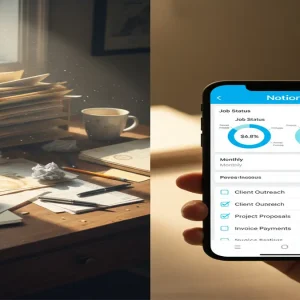
- Notion: For organizing your ‘Prompt Library’ and tracking which versions performed best.
- Canva: For creating professional-looking thumbnail covers for your listings.
- ChatGPT: Use it to help you brainstorm synonyms and technical descriptors to refine your prompts.
Common Pitfalls to Avoid
First, never sell ‘generic’ prompts. If someone can get the same result by typing ‘dog in a hat,’ they won’t pay you for it. Focus on complex, multi-layered styles. Second, don’t ignore the updates. AI models change fast; a prompt that worked in Midjourney v5 might break in v6. You must periodically check and update your listings. Finally, avoid copyright infringement. Never sell prompts that explicitly use a living artist’s name or trademarked characters, as this can lead to store bans and legal headaches.
Take Your First Step Today
The window for early-adopter advantage in the prompt economy is still open, but it won’t stay that way forever. Your next step is simple: Go through your favorite AI images from the last month, find the one with the most unique style, and spend one hour testing that prompt with different subjects. If it’s consistent, you have your first product ready to list. Why wait for the future of work when you can start selling it today?