The Shift from Generic Planners to High-Ticket Business Systems
Most digital creators are fighting for scraps in the saturated world of $5 habit trackers and ‘aesthetic’ student planners. However, a small group of strategic builders has discovered a goldmine by pivoting from B2C to B2B micro-niches. Did you know that specialized Notion ‘Operating Systems’ for private medical practices are currently selling for $150 to $300 per license? It is entirely possible to generate a consistent $4,500 monthly income by serving a specific professional audience that has more money than time.
📹 Watch the video above to learn more!
You’ve likely heard of Notion as a note-taking app, but for a clinical psychologist or a private therapist, it is a potential lifesaver. These professionals are often overwhelmed by fragmented administrative tasks, patient tracking, and session notes. By building a pre-configured, HIPAA-compliant-ready workflow, you aren’t just selling a template; you are selling hours of reclaimed time. This is why the ‘Micro-Niche Notion’ model is currently the most underrated digital product strategy in the creator economy.
What Exactly is a Specialized Notion Ecosystem?
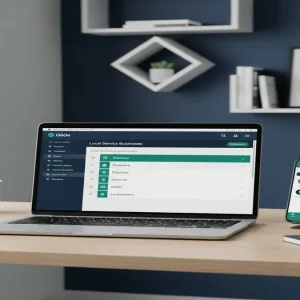
Here’s the thing: a specialized Notion ecosystem is a comprehensive, interconnected database structure designed to manage an entire business. Unlike a simple ‘to-do list’ template, these systems include relational databases that link patient profiles to session notes, billing status, and treatment plans. It’s a ‘business-in-a-box’ that replaces expensive, clunky SaaS subscriptions that often cost hundreds of dollars per month.
The beauty of this model lies in its friction-less delivery. You don’t need to ship physical products, and you don’t need to write a single line of code. You are essentially acting as a digital architect, building a house that your customers simply move into. Because the system is built on Notion, your customers feel a sense of ownership and flexibility that they can’t get from rigid, traditional software. This creates a high perceived value that justifies a premium price tag.
Why This Method Outperforms Traditional Freelancing
Let me show you why this beats trading hours for dollars. When you freelance, your income is capped by the number of hours you can physically work. With niche Notion systems, you build the asset once and sell it indefinitely. Furthermore, professional niches like therapy, law, or construction management have a ‘pain point’ that is far more acute than the average consumer’s desire for a prettier calendar. They are willing to pay for a solution that solves a specific, expensive headache.
The Power of High-Profit Margins
Since your overhead is virtually zero—Notion has a free tier for builders, and platforms like Gumroad take a tiny percentage—your profit margins often exceed 90%. You don’t need thousands of customers to make a full-time living. In fact, selling just one $150 system per day results in $4,500 a month. Compare that to needing to sell 900 copies of a $5 sticker pack to reach the same goal. Which path sounds more sustainable to you?
SaaS Fatigue is Your Secret Weapon
Many professionals are tired of paying $50/month for every single tool they use. By offering a one-time purchase or a lower-cost alternative built on a tool they already know, you become the obvious choice. You are tapping into ‘SaaS fatigue’ by providing a consolidated, customizable environment. The best part? Once they set up their entire practice in your system, they are unlikely to ever leave, leading to incredible word-of-mouth referrals within their professional circles.
How to Launch Your Niche Notion Business in 5 Steps
Step 1: Identify Your ‘High-Pain’ Micro-Niche
Don’t try to build for ‘everyone.’ Instead, look for industries with heavy administrative loads but small team sizes. Clinical therapists, interior designers, or independent consultants are perfect. Research their specific terminology—for example, therapists care about ‘CPT codes’ and ‘SOAP notes.’ Your template must speak their language fluently to be taken seriously as a professional tool.
Step 2: Map the Workflow Before You Build
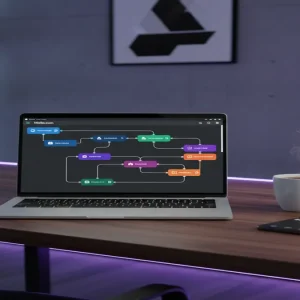
Before touching Notion, grab a piece of paper and map out the user’s journey. What happens when a new patient calls? Where does that data go? How does it link to the weekly schedule? A successful system is all about the ‘Relational Databases.’ You want the user to enter data once and have it appear everywhere it’s needed automatically. This efficiency is exactly what they are paying for.
Step 3: Build the MVP (Minimum Viable Product)
Start building in Notion, focusing on function over aesthetics. Use ‘Linked Views’ to create dashboards that show only what the user needs to see at that moment. For a therapist, this might be a ‘Today’s Appointments’ view that pulls from a master ‘Sessions’ database. Ensure you include a ‘Setup Guide’ page within the template to reduce support emails and help your customers get started immediately.
Step 4: Create a Video-First Sales Page
Professionals need to see the system in action before they buy. Use a tool like Loom to record a 5-minute walk-through of the system. Show them exactly how much time they will save. Host your product on LemonSqueezy or Gumroad for easy payment processing. Your sales page should focus on the benefit: ‘Save 10 hours of admin a week,’ rather than just listing features.
Step 5: Direct Outreach and Niche Communities
Don’t wait for SEO to kick in. Go where your niche hangs out. Join Facebook groups for private practice owners or subreddits dedicated to your chosen profession. Don’t spam; instead, offer advice on organization and mention you’ve built a system that solves these specific issues. One well-placed comment in a professional forum can result in your first $1,000 in sales within days.
Realistic Earnings and Timeline
What can you actually expect to earn? In your first month, as you build and refine, you might only see 2-3 sales ($300 – $450). However, by month three, once you have gathered testimonials and optimized your sales page, hitting 20-30 sales per month is a standard benchmark for successful niche builders. This puts your revenue in the $3,000 to $6,000 range. The initial investment is purely your time—roughly 20-40 hours to build a truly high-quality system—and $0 in capital if you use free tools.
Essential Tools for Your Notion Business
- Notion: The core platform for building your digital assets.
- Loom: For creating video tutorials and sales demonstrations.
- LemonSqueezy: For handling payments, taxes, and digital delivery.
- Canva: To design professional-looking cover images and marketing assets.
- Tally.so: To create intake forms that can embed directly into Notion.
Common Mistakes to Avoid
- Being Too General: If your template can be used by both a plumber and a lawyer, it isn’t specialized enough to command a high price.
- Ignoring Mobile UX: Many professionals check their schedules on their phones. Ensure your dashboards look good on smaller screens.
- Over-complicating the Logic: If a user has to click five times to add a simple note, they will stop using it. Keep the ‘Quick Add’ features front and center.
Take Your First Step Today
The window for high-ticket Notion systems is wide open, but it won’t stay that way forever as more people move away from generic templates. Your next step is simple: pick one professional niche you have some interest in and spend the next hour researching their biggest administrative headache on Reddit or specialized forums. Once you find the pain point, you’ve found your profit. Are you ready to build a system that pays you while you sleep?