The Invisible Market for Visual Architecture
While the rest of the world is busy arguing about whether AI is going to replace artists, a small group of savvy digital entrepreneurs is quietly pocketing $5,000 a month by selling the ‘recipes’ behind the art. You’ve likely seen the hyper-realistic interior design photos or the stunning architectural renders flooding your Instagram feed, but here’s the thing: most professionals don’t have the time to learn how to generate them. They don’t want to spend eighteen hours a day tweaking code-like text strings; they want a plug-and-play solution that gives them consistent, high-end results every single time.
📹 Watch the video above to learn more!
This creates a massive, underserved gap in the market for curated prompt libraries. If you can master a specific aesthetic—like Scandinavian Minimalism or Industrial Loft—you can package those ‘ingredients’ and sell them to designers who are desperate to speed up their workflow. The best part? You don’t need to be a professional photographer or a software engineer to build this into a sustainable income stream.
What Exactly is a Prompt Library?
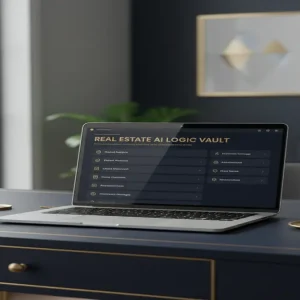
A prompt library isn’t just a random list of words you threw into an AI generator; it’s a sophisticated, structured database of visual commands. Think of it as a digital cookbook for high-end imagery. When you sell a library, you’re providing a collection of tested, refined, and categorized prompts that use specific parameters—like aspect ratios, lighting styles, and ‘Style References’—to produce a cohesive visual brand. You aren’t selling images; you’re selling the ability to generate infinite images that all look like they belong in the same luxury magazine.
Why Brands are Desperate for Consistent AI Aesthetics
The Consistency Problem
Most AI users struggle with the ‘lottery effect.’ They get one great image, but then they can never replicate the lighting or the mood for the next ten. For a business, this is useless. Professionals need consistency to build a brand. By selling a library that utilizes Midjourney’s internal styling features, you provide the ‘DNA’ of a look, solving their biggest frustration.
Low Barrier, High Margin
Unlike physical e-commerce, your ‘inventory’ costs almost nothing to produce after your initial subscription to the AI tool. There is no shipping, no manufacturing, and no overhead beyond your time. Once the library is built and hosted on a platform like Gumroad, every sale is nearly 95% pure profit. This is the definition of a high-leverage digital asset.
Building Your High-Ticket Prompt Library from Scratch
If you’re ready to stop playing with AI and start profiting from it, follow this specific blueprint to launch your first library in under three weeks.
Step 1: Niche Down to a Visual Industry
Don’t try to sell ‘general prompts.’ Instead, focus on a high-value niche like ‘Hyper-Realistic Commercial Kitchens’ or ‘Sustainable Urban Landscape Design.’ When you focus on a specific industry, you can charge a premium because you’re solving a specific business problem. Look for industries that already spend a lot of money on visualization, such as real estate, interior design, or high-end product packaging.
Step 2: The Iterative Engineering Phase
Spend 10-14 days mastering your chosen aesthetic. You need to go beyond basic prompts. Learn how to use the ‘–sref’ (Style Reference) and ‘–cref’ (Character Reference) parameters in Midjourney V6 to ensure that different prompts produce identical lighting and texture. Your goal is to create a set of 50-100 prompts that all feel like they were shot by the same photographer on the same day.
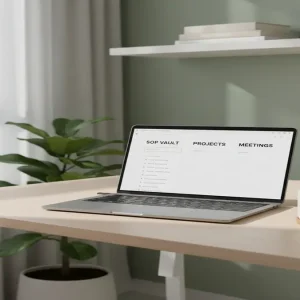
Step 3: Curating the ‘Recipe Book’ in Notion
Presentation is everything. Don’t just send a text file. Build a beautiful, organized dashboard in Notion. Group your prompts by category: ‘Morning Natural Light,’ ‘Golden Hour Shadows,’ ‘Macro Textures,’ and ‘Wide Angle Renders.’ Include a high-resolution sample image next to every prompt so the buyer knows exactly what they are getting. This professional packaging allows you to charge $97 for a product that others are trying to sell for $10.
Step 4: Launching on Specialized Marketplaces
While you should eventually have your own storefront, start where the traffic already exists. Upload your best individual prompts to PromptBase to build authority, but host your full ‘Library’ on Gumroad or LemonSqueezy. Use Twitter (X) and Pinterest to showcase your results. Pinterest is a goldmine for this because it’s a visual search engine; one viral pin of a stunning AI-generated kitchen can drive thousands of targeted leads to your library.
The Math Behind the Revenue
Let’s look at the realistic numbers for a mid-tier prompt library. If you price your ‘Architectural Visualization Master-Pack’ at $67 and you can drive just 2 sales per day through organic social media, you’re looking at $4,020 per month. Most successful creators in this space see a ‘first dollar’ timeline of about 14 to 21 days. Your only real investment is the $30/month Midjourney Pro subscription and about 40 hours of focused ‘engineering’ time to build the initial asset.
Essential Tools for Your AI Micro-Business
- Midjourney: The industry standard for high-end visual generation.
- Notion: For building the actual ‘Library’ dashboard that you deliver to customers.
- Gumroad: The easiest platform to handle digital payments and file delivery.
- Canva: To create professional-looking cover art and marketing graphics for your store.
- Pinterest: Your primary organic traffic driver for visual products.
Mistakes That Will Kill Your Conversion Rate
- Being Too Broad: A ‘General AI Guide’ is worth nothing. A ‘Mid-Century Modern Furniture Prompt Library’ is worth $100.
- Ignoring the Technicals: If you don’t include parameters like –v 6.0 or specific aspect ratios (–ar 16:9), your prompts won’t work for the buyer, leading to refunds.
- Poor Visual Proof: Your sales page must be visually breathtaking. If your preview images aren’t perfect, nobody will trust your prompts.
- No Updates: AI moves fast. If you don’t update your library when a new version of Midjourney drops, your product will become obsolete in months.
Your Next Move
The window for ‘early adopter’ profits in the prompt engineering space is still wide open, but it won’t stay that way forever. Professionals are looking for these tools right now to save their businesses time and money. Your next step is simple: Pick one visual style today, open a Midjourney account, and generate your first 10 ‘perfect’ images. Once you have a consistent look, you have the foundation of a digital empire.