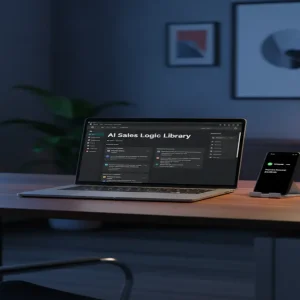
The Secret Economy of the ‘Golden Prompt’
You are sitting on a goldmine every time you close a ChatGPT tab without saving your best work. While the rest of the world is using AI to write mediocre poems or basic emails, a small group of savvy creators is quietly harvesting their most effective chat sequences and selling them for hundreds of dollars. It sounds too simple to be true, but in the high-stakes world of real estate, time isn’t just money—it’s everything. If you can save a busy agent five hours a week by handing them the exact ‘logic’ they need to automate their business, they won’t just thank you; they will pay you premium rates for it.
📹 Watch the video above to learn more!
The truth is, most professionals are terrified of the ‘blank box’ of an AI interface. They know they should be using AI, but they don’t have the patience to learn the nuances of prompt engineering. This creates a massive opportunity for you to act as the bridge. You aren’t just selling words; you are selling a plug-and-play productivity system that solves a specific, burning pain point for a high-income industry. Let’s dive into how you can turn your casual AI experimentation into a high-margin digital asset business.
What Exactly is a Niche Prompt Library?
A niche prompt library is a curated collection of highly specific, tested, and refined instructions designed to produce a professional-grade output for a particular industry. Instead of a generic prompt like “write a real estate listing,” a premium library offers a sequence: “Act as a luxury real estate copywriter. Use the following property specs to create a 300-word listing that emphasizes architectural heritage and uses the ‘Problem-Agitate-Solve’ framework for the call to action.”
When you bundle 20 to 50 of these specialized sequences into a structured format, you’ve created a proprietary digital asset. You aren’t selling a PDF; you are selling a repeatable result. The buyer simply copies your work, pastes their specific data, and gets an output that would have previously cost them thousands of dollars in agency fees. It’s the ultimate shortcut for the non-tech-savvy professional.
Why This Method Beats Every Other Side Hustle
The primary reason this works so well is the perceived value versus effort ratio. For you, creating a prompt takes a few minutes of trial and error. For a real estate agent, that same prompt represents a social media manager, a copywriter, and a lead generation specialist all rolled into one. You are selling them their time back, and that is a product that never goes out of style. Unlike dropshipping or freelancing, there is no inventory to manage and no clients to answer to after the sale is made.
Furthermore, the overhead is virtually zero. You don’t need a fancy office or a team of developers. If you have a laptop and a $20/month ChatGPT Plus subscription, you have everything you need to build a business that scales. Once the library is built, every sale is 100% profit. It’s a scalable digital product that works for you while you sleep, targeting an audience that is already conditioned to spend money on tools that grow their business.
How to Build Your Prompt Empire in 5 Steps
Step 1: Identify Your High-Value Niche
Don’t try to sell prompts to everyone. If you target “small business owners,” you will fail. Instead, go deep into a niche where the professionals have high commissions. Real estate agents, mortgage brokers, legal consultants, and medical spa owners are perfect candidates. They have specific marketing needs and the budget to pay for solutions. Focus on one: for example, Residential Real Estate Agents in the Luxury Market.
Step 2: Engineer the ‘Golden’ Sequence
Spend a week acting as if you are in that profession. What do they hate doing? They hate writing property descriptions, they struggle with cold lead follow-ups, and they find it hard to create consistent LinkedIn content. Build prompts that solve these specific tasks. Test them until they produce perfect results every single time. Your prompts should include variables like [Property Type] or [Client Objection] so the user knows exactly where to input their data.
Step 3: Package the Logic into a Premium Dashboard
Do not just send a Word document. Use a tool like Notion to create a beautiful, searchable dashboard. Organize your prompts by category: ‘Lead Gen,’ ‘Social Media,’ ‘Client Relations,’ and ‘Listing Descriptions.’ Adding a few short Loom videos explaining how to use the prompts will instantly double the perceived value of your product. This makes the experience feel like a high-end software tool rather than a simple list.
Step 4: Deploy Your Automated Storefront
Set up a store on Gumroad or LemonSqueezy. These platforms handle all the payments, taxes, and digital delivery for you. Price your library between $97 and $197. This is the ‘sweet spot’ where it’s an impulse buy for a professional but high enough to signal quality. Write a sales page that focuses on the hours they will save, not the tech specs of the AI.
Step 5: The Stealth LinkedIn Strategy
You don’t need ads. Go to LinkedIn and search for your target professionals. Don’t pitch them. Instead, post a video of you using one of your prompts to turn a messy pile of notes into a stunning property listing in 30 seconds. End the post with: “I built a library of 50 of these for my private clients. DM me ‘PROMPT’ if you want the link.” This creates curiosity and attracts high-quality leads without being ‘salesy.’
Realistic Earnings and Timelines
This is not a get-rich-overnight scheme, but it is fast. Most creators spend 10–14 days building their first library. Once launched, selling just 10 libraries a month at $150 each nets you $1,500 in passive income. As your LinkedIn presence grows or you experiment with small-budget Meta ads, scaling to 30 sales a month ($4,500) is a very realistic 90-day goal. Your only recurring cost is your AI subscription and a small transaction fee from your storefront.
Essential Tools for Your Prompt Business
- ChatGPT (Plus Version): For engineering and testing high-quality prompts.
- Notion: To host and organize your prompt library for your customers.
- Gumroad: To handle payments and automated digital delivery.
- Loom: To record quick ‘how-to’ tutorials for your buyers.
- Canva: To create a professional-looking thumbnail for your product.
Common Pitfalls to Avoid
The biggest mistake is selling generic prompts. If a user can find your prompt for free on a basic blog post, they will ask for a refund. Always add layers of complexity to your prompts that ensure a unique brand voice. Secondly, don’t ignore the formatting. If your Notion board looks messy, the buyer will feel the product is cheap. Finally, avoid over-complicating the tech. You don’t need an app; you just need to provide the ‘recipes’ that work.
Your Next Move
The window for being a ‘first mover’ in niche prompt libraries is closing as more people catch on to the AI wave. To start today, pick one industry you understand even slightly, and write down the three most boring writing tasks they face every day. That is the foundation of your first $1,000 digital asset. Start building your first five prompts tonight.