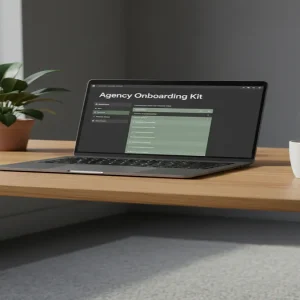
The Death of the Tutorial and the Rise of the Curator
Did you know that the average high-level executive spends nearly 20% of their workweek just searching for internal information or external resources they already know exist? I stopped trying to write long-winded ‘how-to’ guides and started selling my vetted, organized ‘where-to-find-it’ lists, turning a simple Notion database into a $4,500 monthly revenue stream. In a world drowning in content, people are no longer starving for information; they are starving for direction. If you can filter the noise and provide a shortcut to the best resources in a specific niche, you aren’t just selling a list—you’re selling time, and time is the most expensive commodity on the planet.
📹 Watch the video above to learn more!
What Exactly is a High-Ticket Resource Library?
Here’s the thing: a resource library is not just a collection of random links you found on Google. It is a strategically curated ecosystem of tools, templates, contacts, and data points that solve a specific professional problem. Think of it as a ‘business-in-a-box’ reference guide. For example, instead of teaching someone how to start a sustainable fashion brand, you sell them a vetted directory of 50 eco-friendly manufacturers, 20 sustainable fabric suppliers, and 10 specialized legal templates for the industry. You’ve done the 100 hours of research so they don’t have to. That is the essence of curation arbitrage.
Why Professionals Gladly Pay for Your Bookmarks
The best part about this model? It bypasses the ‘expert’ trap. You don’t need to be the world’s leading authority on a subject; you just need to be the most organized researcher in the room. High-income professionals, such as lawyers, real estate developers, or tech founders, have more money than time. They would much rather pay $200 or $500 for a curated ‘Vault’ that they can reference forever than spend their weekend scouring forums and LinkedIn threads. By packaging your research, you are providing a high-utility asset that offers an immediate return on investment for the buyer. It’s professional-grade convenience, and it’s a market that is currently wide open.
Your 5-Step Blueprint to Curation Profits
Step 1: Identifying a High-Friction Information Gap
Your first task is to find a niche where the information is scattered, outdated, or gate-kept. Don’t go broad; the riches are in the niches. Instead of ‘Marketing Tools,’ focus on ‘AI Automation Tools for Boutique Law Firms.’ You want to find a community that is actively complaining about how hard it is to find reliable vendors, software, or data. Check Reddit, specialized Slack channels, or industry-specific forums to see what people are asking for repeatedly. If you see the same ‘Does anyone know a good…’ question three times, you’ve found your product.
Step 2: Building the Architecture of Value
Once you’ve picked your niche, you need a place to house the data. I recommend using Airtable or Notion because they allow for easy filtering and a clean, professional UI. Start by categorizing your resources into logical buckets. If you’re building a library for independent filmmakers, your categories might be ‘Location Scouting Apps,’ ‘Discount Equipment Rentals,’ and ‘Film Festival Submission Trackers.’ Aim for at least 50 to 100 high-quality entries before you even think about launching. Quality is your only metric here; one broken link or irrelevant resource can ruin your reputation.
Step 3: The Vetting Protocol
This is where you earn your money. You must vet every single item in your library. Does the tool actually work? Is the contact still active? What are the pros and cons? Add a ‘Curator’s Note’ to each entry explaining why it’s included and how to use it. This adds the ‘insider knowledge’ feel that buyers crave. You are acting as a concierge, ensuring that every resource in the database is a ‘gold’ recommendation. This vetting process is what justifies a price tag of $197 or higher.
Step 4: Setting Up Your Automated Storefront
You don’t need a complex website to sell this. A simple landing page on Carrd or a product listing on Gumroad or LemonSqueezy is more than enough. Your sales copy should focus entirely on the time saved. Use a headline like: ‘Save 40+ Hours of Research: The Complete AI-Workflow Vault for Architects.’ Make sure to include a video walkthrough of the database so potential buyers can see the depth and organization of the content. Once they see the sheer volume of organized data, the price becomes a no-brainer.
Step 5: The Low-Noise Marketing Strategy
Forget expensive Facebook ads. The most effective way to sell a curated library is through ‘value-bombing’ in niche communities. Share a small piece of your research for free—perhaps a ‘Top 5’ list—and then mention that the full database of 100+ items is available for those who want to skip the legwork. You can also reach out to industry influencers and offer them an affiliate commission to share the library with their audience. Since it’s a high-utility tool, they are often happy to recommend it to their followers as a helpful resource.
The Math Behind a $5,000 Monthly Income
Let’s look at the numbers because they are surprisingly achievable. If you price your ‘Master Library’ at $197, you only need to make 26 sales a month to hit the $5,000 mark. That is less than one sale per day. If you target a high-ticket industry like Fintech or Real Estate, you can easily charge $497 per access key. At that price point, you only need 10 customers a month. The initial setup takes about 20 to 30 hours of focused research, but once it’s built, the maintenance is minimal—usually just an hour a week to check for broken links and add new finds.
The Essential Curation Toolkit
- Notion or Airtable: For building and hosting the actual database.
- Gumroad or LemonSqueezy: For payment processing and digital delivery.
- Carrd: For a fast, high-converting one-page landing site.
- Loom: For creating the ‘behind-the-scenes’ preview video.
- Hunter.io: For finding contact emails of potential industry partners.
3 Deadly Mistakes That Kill Your Conversion Rate
First, avoid ‘Information Bloat.’ Don’t just dump 500 links into a sheet; that just creates more work for the buyer. It’s better to have 50 highly-vetted resources than 500 mediocre ones. Second, never forget to update. A dead link is a signal that your product is abandoned. Set a monthly calendar reminder to audit your library. Finally, don’t be generic. If your library looks like something a quick ChatGPT prompt could generate, nobody will pay for it. Your unique commentary and ‘insider’ vetting are what create the value.
Start Your First Library Today
The curation economy is just beginning, and the barrier to entry is simply your willingness to be more organized than everyone else. Your next step is simple: pick one professional problem you’ve already solved for yourself, open a new Notion page, and start documenting every tool and resource you used to get there. You’re already doing the research—it’s time you started getting paid for it.