The Invisible Crisis Facing Modern Airbnb Hosts
Did you know that nearly 60% of new Airbnb hosts quit within their first 18 months because of administrative burnout? It’s a startling statistic that reveals a massive, underserved gap in the short-term rental market. While everyone else is fighting over $15 ‘To-Do List’ templates on Etsy, a small group of savvy creators is quietly earning $4,000 to $6,000 a month by solving this specific burnout problem. They aren’t selling generic checklists; they are selling high-ticket ‘Property Command Centers’ built entirely within Notion. This isn’t just a digital product; it’s a specialized business system that hosts are desperate to buy.
📹 Watch the video above to learn more!
Have you ever wondered why some digital creators struggle to make $100 while others command premium prices for the same amount of work? The secret lies in the specificity of the pain point you’re solving. For an Airbnb host managing three or four properties, the ‘mental load’ of tracking cleaning schedules, guest communications, and maintenance logs is overwhelming. By providing a centralized, automated system, you aren’t just selling a template; you’re selling them their time and sanity back. Let me show you how this niche works and how you can enter it today.
What Exactly is a High-Ticket Property Command Center?
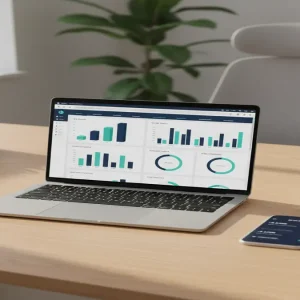
A Property Command Center is a sophisticated Notion workspace designed to handle the entire lifecycle of a short-term rental business. Unlike a basic guest book, this is a back-end tool for the host. It includes interconnected databases for vendor management, automated check-in sequences, financial tracking, and maintenance logs. When a host opens this page, they see a bird’s-eye view of their entire operation in real-time. It’s the difference between a messy pile of spreadsheets and a professional dashboard.
Solving the ‘Mental Load’ Problem
The primary reason hosts pay a premium for these systems is the reduction of cognitive friction. When a pipe bursts at 3 AM, they don’t want to search through emails for a plumber’s number. They want to click one button in their Notion dashboard. By pre-building these relational databases, you’re doing the heavy lifting that the average host doesn’t have the time or technical skill to do themselves. You are effectively acting as a systems consultant, but delivering the solution as a scalable digital asset.
The Anatomy of a $200 Template
To justify a $200 price point, your template needs to be more than just pretty; it must be functional. A high-converting Command Center usually features a ‘Cleaning Sync’ database, a ‘Guest Experience’ CRM, and a ‘Financial Health’ tracker that calculates ROI and occupancy rates automatically. The best part? Once you build the master architecture, you can duplicate it and sell it infinitely with zero additional effort. It’s the ultimate ‘build once, sell twice’ model applied to a high-paying professional niche.
Why This Specific Niche is a Goldmine Right Now
The short-term rental market has matured significantly over the last three years. The ‘amateur’ era of Airbnb is over, and professionalization is the new standard. Hosts are now looking for professional tools to compete with boutique hotels. However, most enterprise property management software costs hundreds of dollars per month in subscription fees. This creates a perfect ‘Goldilocks’ zone for you: you can offer a one-time purchase price that is cheaper than long-term software but more powerful than a basic spreadsheet.
High Perceived Value vs. Low Production Cost
Because you are targeting business owners rather than hobbyists, the perceived value of your product is tied to the revenue it protects. If your template saves a host five hours a week, and they value their time at $50 an hour, the template pays for itself in less than a month. From your perspective, the production cost is simply your time. You don’t need to pay for inventory, shipping, or expensive software licenses. Notion’s free tier is often enough to build the initial prototype.
Zero Recurring Expenses
One of the biggest hurdles in online business is the ‘subscription creep’—the dozens of small monthly fees that eat your profits. With this model, your overhead is virtually zero. You host the product on a platform like Gumroad or LemonSqueezy, which only takes a small cut when you actually make a sale. This means your profit margins stay consistently above 90%, which is almost unheard of in traditional retail or even most service-based freelancing.
Your 5-Step Roadmap to $4,000 Monthly Revenue
Ready to build your own digital empire? You don’t need to be a coding wizard to make this work, but you do need to be methodical. Here is the exact process to go from zero to your first $200 sale. Don’t skip the research phase; it’s the most important part of the entire journey.
Step 1: The Deep Dive Research
Spend three days inside Airbnb host forums and Facebook groups. Don’t look for what they like; look for what they hate. Are they struggling with cleaners who don’t show up? Are they losing track of their expenses? Identify the three biggest ‘headaches’ these hosts face. These headaches will become the core modules of your Notion template. Your marketing will eventually speak directly to these specific frustrations, making your product feel like a custom-made solution.
Step 2: Building the Architecture
Open a fresh Notion page and start building the databases. Use ‘Relations’ and ‘Rollups’ to make the data talk to each other. For example, when a host enters a cleaning fee in the ‘Expenses’ database, it should automatically update the ‘Profit/Loss’ summary on the main dashboard. Focus on a clean, minimalist aesthetic. Airbnb hosts value ‘vibe’ and professional branding, so use high-quality icons and a consistent color palette throughout the workspace.
Step 3: The ‘Beta Host’ Strategy
Before you launch publicly, find one host and offer them the template for free in exchange for a detailed video testimonial and feedback. This is crucial. Their feedback will help you find bugs you missed, and their testimonial will provide the social proof needed to justify the $200 price tag. A single screenshot of a real host saying ‘This saved my business’ is worth more than a thousand words of sales copy.
Step 4: Creating the Loom Walkthrough
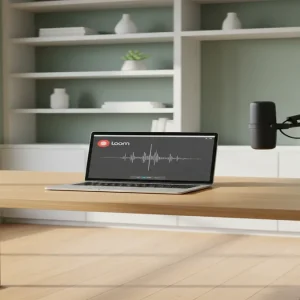
High-ticket digital products require guidance. Record a 10-minute video using Loom showing exactly how to use the template. Show them how to add their first property, how to track their first booking, and how to read the financial charts. This reduces the ‘fear of technology’ that many older hosts might feel. By including this video as part of the purchase, you’re increasing the value of the package significantly without adding any recurring work for yourself.
Step 5: Launching on Gumroad
Set up your product page on Gumroad. Use Canva to create professional-looking mockups of the template on a laptop and tablet screen. Set your price at $197. Why not $200? The ’97’ ending is a classic psychological pricing tactic that tends to convert better. Now, go back to those forums where you did your research and share your journey, offering the template as the solution to the problems they were complaining about.
Realistic Earnings and Timelines
Let’s talk numbers. This is not a ‘get rich tomorrow’ scheme, but it is a highly scalable business. In your first month, your goal should be to find your beta tester and build the product. In month two, you should aim for 5 sales ($985). By month three, as your SEO on platforms like Gumroad and Pinterest kicks in, hitting 20 sales a month ($3,940) is a very realistic target. The beauty of this model is that 20 sales a month is only five sales a week. You don’t need millions of followers; you just need to reach 20 stressed-out hosts.
Essential Tech Stack for Your Micro-Business
- Notion: The core platform where you will build and host your templates. (Free to start).
- Gumroad: For handling payments, digital delivery, and your affiliate program.
- Loom: For recording the essential video tutorials and ‘how-to’ guides for your customers.
- Canva: To design high-end thumbnails, social media posts, and PDF welcome guides.
- Pinterest: The best ‘slow-burn’ traffic source for Notion templates and home-decor niches.
Fatal Mistakes That Will Kill Your Conversion Rate
The most common mistake beginners make is overcomplicating the design. If a host has to spend three hours learning how to use your ‘simple’ tool, they will ask for a refund. Keep the user interface intuitive. Another mistake is ignoring mobile optimization. Many hosts check their stats on their phones while they are on the go, so ensure your Notion layout looks great on the mobile app. Finally, don’t forget to include a ‘Getting Started’ guide. Never leave your customer staring at a blank screen wondering what to do first.
Your Next Move
The opportunity to dominate a high-ticket Notion niche is wide open right now, but it won’t stay that way forever as more people move away from low-cost digital products. Your next step is simple: Go to a site like BiggerPockets or an Airbnb host subreddit and read the ‘Vent’ or ‘Rant’ threads for the next 30 minutes. Identify the one recurring problem that keeps coming up, and start sketching your Notion solution on a piece of paper. The path to a $4,000 monthly income starts with solving one person’s very specific headache.