The Hidden Goldmine in Micro-Niche Digital Assets
Right now, thousands of Airbnb hosts are drowning in spreadsheets, sticky notes, and chaotic cleaning schedules. What if you could solve their biggest headache with a free tool and get paid $97 a pop for it? Imagine waking up to a notification that someone just bought a digital file you created six months ago. That’s the reality of selling hyper-niche digital assets.
📹 Watch the video above to learn more!
Most creators are trying to sell generic “life planners” or “fitness trackers” to everyone. Here’s the secret: when you sell to everyone, you sell to no one. The real money lies in solving highly specific problems for people who are already making money.
Enter the Airbnb Host Notion Operating System.
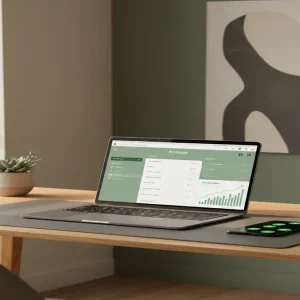
Short-term rental hosts manage a chaotic web of guest communications, cleaning crews, inventory restocking, and financial tracking. They’re desperate for organization. By creating a plug-and-play Notion template tailored specifically to their workflow, you aren’t just selling a digital product. You’re selling them their time back.
Why This Hyper-Specific Model Actually Works
You might be wondering why someone would pay for a template when Notion is completely free to use. The answer is simple: execution is exhausting.
Business owners have zero desire to spend forty hours learning a new software, configuring databases, and linking relational tables. They want a solution that works out of the box right this second. Let’s break down why this model is so lucrative.
High Perceived Value
A generic to-do list template sells for $5. A complete “Short-Term Rental Management System” sells for $97 to $149. The platform is exactly the same, but the perceived value is drastically different because it solves a high-stakes business problem.
Zero Marginal Cost of Production
You build this digital asset exactly once. Whether you sell one copy or one thousand copies, your production costs remain at zero. No inventory, no shipping delays, and absolutely no supply chain nightmares.
How to Build Your Notion Dashboard Empire
Ready to claim your slice of this profitable pie? Here’s your exact blueprint to go from zero to your first digital sale.
Step 1: Research the Host Workflow
Don’t guess what an Airbnb host needs. Go straight to the source. Spend a few hours browsing the Airbnb subreddit or host forums on Facebook. Look for their biggest complaints. You’ll quickly notice patterns around managing cleaning schedules, tracking ROI, and handling guest FAQs.
Step 2: Architect the Notion Workspace
Sign up for a free Notion account and start building. You’ll want to create distinct, interconnected databases. Build a master calendar for bookings, a checklist for property turnover, and a financial ledger for tracking expenses. Make it visually appealing with clean icons and a cohesive color palette.
Step 3: Package the Product
Your template needs to be entirely foolproof. Add a “Start Here” page with embedded Loom videos explaining exactly how to duplicate the template and use each section. The less customer support you have to do, the more passive this income stream becomes.
Step 4: Set Up Your Digital Storefront
You don’t need a complex website to launch. Create a free account on Gumroad or Lemon Squeezy. Upload your template link, write a compelling sales page highlighting the pain points you’re solving, and set your price.
Step 5: Drive Targeted Traffic
Skip the generic Instagram ads. Instead, create short-form content on TikTok and YouTube Shorts showing your dashboard in action. Use titles like “How I manage 3 Airbnb properties in 10 minutes a day.” You can also partner with micro-influencers in the real estate space for an affiliate split.
The Realistic Economics of Notion Templates
Let’s talk real numbers. This isn’t a get-rich-quick scheme, but it’s a highly scalable business model.
Monthly Earning Potential
Once your system is dialed in, a realistic earning potential ranges from $1,500 to $4,500 per month. If you price your template at $97, you only need to make 15 sales a month to hit nearly $1,500. That’s just one sale every two days.
Initial Investment and Timeline
Your financial investment is literally zero dollars. Your time investment will be roughly 15 to 20 hours to research, build, and refine the template. If you stay consistent with your marketing, you can realistically expect your first dollar earned within 14 to 21 days of launching.
Required Skill Level
You need an intermediate understanding of Notion. You don’t need to be a coder, but you must understand how relational databases and rollups work within the platform.
Your Essential Tech Stack
Keep your overhead low. Here are the exact tools you need to run this business:
- Notion: The core platform where you’ll build the actual product (Free).
- Gumroad: The payment processor and digital delivery system (Takes a small percentage of sales).
- Loom: For recording screen-share tutorials to include in your template (Free tier available).
- Canva: To design beautiful mockups for your Gumroad sales page and social media (Free).
- Reddit: For deep-dive market research into your target audience’s pain points (Free).
4 Fatal Mistakes to Avoid
I’ve seen countless creators fail at selling digital products. Don’t fall into these common traps.
Overcomplicating the Design
Your buyers want simplicity, not a labyrinth of endless pages. If it takes them more than ten minutes to understand how to use your dashboard, they’ll ask for a refund. Keep the interface clean and intuitive.
Selling Features Instead of Solutions
Nobody cares that your template has “15 interconnected databases.” They care that it will stop them from double-booking a guest or forgetting to pay the cleaner. Always market the time and stress saved.
Neglecting the Onboarding Experience
Handing over a complex system without instructions is a recipe for disaster. Your embedded video tutorials are what elevate your product from a cheap download to a premium software experience. Don’t skip them.
Ignoring the Post-Purchase Follow Up
Most sellers deliver the product and disappear forever. Here’s the thing: your current buyers are your best future customers. Set up an automated email sequence in Gumroad to check in on them after a week. Ask for a review and offer them a discount on your next expansion pack.
Your Next Steps to Passive Revenue
The beauty of the digital product space is that the barrier to entry is entirely in your own head. You don’t need investors, you don’t need inventory, and you certainly don’t need permission.
You just need to identify a specific group of people with a specific problem, and build the bridge that gets them to the solution.
Your action item for today is simple. Open up a blank Notion page, pick a niche you’re mildly interested in, and start mapping out their daily workflows. Your $97 digital asset is waiting to be built. Are you ready to start creating?