The Invisible Asset Hiding in Your Browser
Most people look at a blank Google Sheet and see a boring grid of cells, but savvy digital entrepreneurs see a high-margin product that requires zero inventory and zero shipping costs. While the rest of the world is fighting over saturated dropshipping niches, a quiet group of creators is earning thousands by selling ‘order’ to the chaotic lives of small business owners. I recently discovered a creator who turned a simple ‘Airbnb Cleaning Checklist’ spreadsheet into a consistent $3,800 monthly revenue stream with almost no upkeep. Does that sound too simple to be true? Let me show you why utility-based digital products are the most overlooked goldmine of the decade.
📹 Watch the video above to learn more!
What Exactly is the Spreadsheet Economy?
The spreadsheet economy isn’t about being a math genius or a data scientist; it’s about solving a specific organizational problem for a specific group of people. You aren’t selling rows and columns; you are selling time, clarity, and peace of mind. Many small business owners, from wedding photographers to crypto traders, are drowning in data but don’t have the time to build their own tracking systems. When you provide a pre-formatted, aesthetically pleasing, and functional Google Sheet, you’re providing a ‘software-lite’ solution that they can use instantly. It’s the bridge between a messy notebook and a thousand-dollar custom software subscription.
The Shift from Data to Design
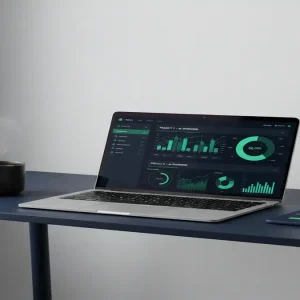
The secret sauce in today’s market is the ‘Functional Aesthetic.’ Gone are the days of gray cells and default fonts. The sheets that sell for $30 to $70 a piece are designed to look like professional dashboards. They use custom color palettes, integrated checkboxes, and automated charts that make the user feel like they are using a high-end application. By using Google Sheets, you are leveraging a platform that your customers already know and trust, which removes the friction of them having to learn a new tool.
Why This Method Outperforms Traditional Freelancing
If you’re tired of trading your hours for dollars, the spreadsheet model is your exit strategy. Unlike freelancing, where you have to find a new client for every paycheck, a digital template is built once and sold infinitely. The best part? Google Sheets are inherently collaborative. When a business owner buys your template and shares it with their team, they are effectively becoming an advocate for your brand. The overhead is virtually zero—your only ‘manufacturing’ cost is your time, and your only ‘warehouse’ is a free Google Drive account.
The Psychology of the ‘One-Click’ Solution
People are willing to pay a premium for anything that removes a barrier to entry. If a real estate agent needs to track their commissions, they could spend five hours watching YouTube tutorials to build a tracker, or they could spend $29 to download yours and start using it in five seconds. Most professionals value their hour at more than $29, making your product an ‘easy yes’ from a financial perspective. This is why niche templates often have higher conversion rates than general business courses or ebooks.
How to Build Your Spreadsheet Empire in 5 Steps
-
Identify a ‘Messy Middle’ Niche
Don’t try to make a ‘Budget Planner’—there are millions of those. Instead, focus on a ‘Messy Middle’ niche like ‘Inventory Management for Etsy Soap Makers’ or ‘Client Onboarding Tracker for Interior Designers.’ The more specific the pain point, the less competition you face and the more you can charge. Look for industries where people are still using pen and paper or disorganized email threads to manage their daily tasks.
-
Build the Minimum Viable Template (MVT)
Start with the core functionality. What is the one thing this person needs to track? Build the formulas first to ensure everything works perfectly. Use ‘Data Validation’ to create dropdown menus and ‘Conditional Formatting’ to make important numbers pop. Ensure your sheet is robust; use protected ranges so your customers don’t accidentally break the formulas you spent hours perfecting.
-
Apply the ‘App-Like’ Interface
This is where you differentiate yourself. Hide the gridlines, use rounded shapes for buttons, and choose a professional color palette from a site like Coolors.co. Add a ‘Dashboard’ tab that summarizes the data in visual charts. If it looks like a piece of software, people will treat it like a piece of software. A beautiful interface justifies a higher price point and leads to better customer reviews.
-
The ‘Instructional Layer’
A great product is useless if the user doesn’t know how to use it. Include a ‘Start Here’ tab with clear, step-by-step instructions. Better yet, record a 5-minute Loom video walking them through the sheet and embed the link directly in the template. This reduces customer support queries and makes the user experience seamless from the moment they click ‘Make a Copy.’
-
Automated Distribution
Set up your shop on a platform like Etsy or Gumroad. When a customer buys your product, they receive a PDF containing the link to your Google Sheet template. The link should be set to ‘/copy’ at the end so it forces the user to create their own private version in their Drive. This ensures your master file remains untouched while the customer gets their own workspace instantly.
Realistic Earnings and Timeline
Let’s talk numbers because this isn’t a get-rich-quick scheme. In your first month, you might only make $100 as you test different niches. However, once you find a ‘winning’ template, the scaling is aggressive. A single well-ranked template on Etsy can generate 5-10 sales a day. At a $35 price point, that is $175 – $350 per day in passive revenue. Most successful creators in this space reach the $2,000 – $4,000 monthly mark within 6 months of consistent uploading. Your initial investment is $0, and your time investment is roughly 10-15 hours per template.
Your Essential Toolkit
- Google Sheets: Your primary development environment (Free).
- Canva: For creating high-converting listing images and PDF delivery guides.
- Etsy or Gumroad: Your storefront and payment processor.
- Loom: For recording video tutorials to include with your sheets.
- Coolors.co: For finding professional color schemes that make your sheets look premium.
Common Pitfalls to Avoid
The biggest mistake is over-engineering. You don’t need complex Script Editor (AppScript) code to make a valuable sheet; simple formulas like VLOOKUP, SUMIFS, and QUERY are usually more than enough. Another mistake is ignoring mobile users. While most people use sheets on a desktop, check that your dashboard still looks decent on a tablet or phone. Finally, don’t neglect your SEO. If you are selling on Etsy, your title and tags must match exactly what your target customer is searching for, such as ‘ADHD daily planner spreadsheet’ rather than just ‘planner.’
Your Next Move
The barrier to entry is low, but the window of opportunity is wide open as more small businesses move to digital-first operations. You don’t need to be a programmer to build the next big digital tool; you just need to be a problem solver with a Gmail account. Here is your challenge: Go to a niche forum or subreddit today, find one thing people are complaining about tracking manually, and build a 3-tab Google Sheet that solves it. Start your first template today and list it by the weekend.