The High-Ticket Shift Most Digital Creators Are Missing
You are likely using Notion to organize your personal grocery list or track your daily habits, while a small, savvy group of creators is quietly pulling in $4,000 every month by selling digital ‘Operating Systems’ to niche professionals. Here is the bold truth: the era of the $10 aesthetic habit tracker is over, and the era of the $150+ high-utility industry solution has arrived. Have you ever wondered why some people struggle to make a single sale on Etsy while others are building five-figure monthly revenues with zero inventory? It is not about the platform; it is about the depth of the problem you are solving for your customers.
📹 Watch the video above to learn more!
Most people treat digital products like cheap commodities, but the real money is in ‘Micro-SaaS’ equivalents built within Notion. By the time you finish reading this, you will understand exactly how to stop trading your time for hourly rates and start building digital assets that solve high-stakes business problems. Let’s dive into the mechanics of the Industry OS model.
What Exactly is an Industry Operating System?
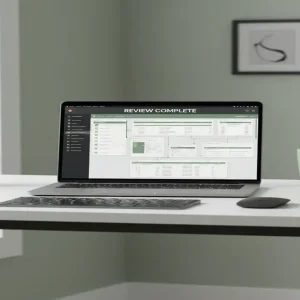
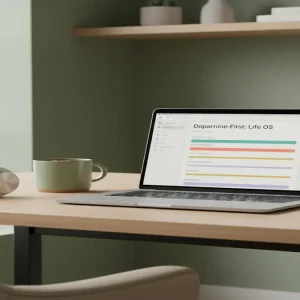
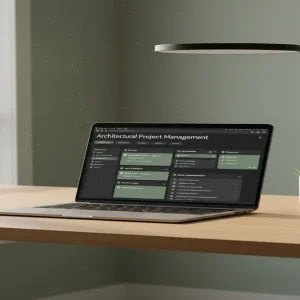
An Industry Operating System (OS) is more than just a template; it is a comprehensive, interconnected workspace designed to manage the entire workflow of a specific profession. Imagine a Real Estate Agent who currently juggles five different apps to manage leads, track showings, organize contracts, and schedule social media. An ‘Industry OS’ brings all of those fragmented pieces into one cohesive Notion environment. It is a ‘business-in-a-box’ that saves the user dozens of hours every single week.
When you sell a generic ‘to-do list,’ you are competing with thousands of free versions. However, when you sell a ‘Legal Case Management OS for Boutique Law Firms,’ you are competing with expensive, clunky enterprise software. You are providing a streamlined, customizable alternative that feels personal. This specificity allows you to charge premium prices because the perceived value is tied to the business revenue you are helping your customer manage, rather than just ‘organization.’
Why This Model Outperforms Traditional Freelancing
The best part about this strategy is the scalability. In traditional freelancing, if you want to double your income, you usually have to double your workload or your rates. With the Industry OS model, you build the product once and sell it an infinite number of times. You are essentially becoming a software founder without needing to write a single line of code. Since Notion handles the hosting and the infrastructure, your overhead is practically zero.
High Profit Margins
Because there are no physical goods, shipping costs, or manufacturing fees, your profit margins sit comfortably around 95%. Your only real costs are your time and a few low-cost monthly subscriptions for hosting your storefront. This is the ultimate ‘lean’ business model for digital nomads and home-based entrepreneurs.
Deep Market Integration
When you build for a specific niche, you become an authority in that space. You aren’t just another ‘Notion guy’; you are the person who understands the specific pain points of Interior Designers or Solar Sales Reps. This makes your marketing significantly easier because you know exactly where your audience hangs out and what language they use to describe their frustrations.
How to Build and Launch Your First Industry OS
Getting started does not require a computer science degree, but it does require a deep dive into a specific industry’s workflow. Here is the exact roadmap to follow if you want to see your first sale within the next 30 days.
Step 1: Identify a High-Friction Niche
Stop looking for ‘popular’ niches and start looking for ‘painful’ ones. Look for industries that are traditionally slow to adopt new technology or those that rely on messy spreadsheets. Think about Property Managers, Personal Trainers, Independent Consultants, or even Specialty Coffee Shop Owners. Ask yourself: Who has a complex workflow and the budget to pay for a solution? Avoid niches like ‘students’ who generally have more time than money.
Step 2: Map the Workflow Architecture
Before you even open Notion, grab a piece of paper. Map out every stage of your target customer’s day. What is the first thing they do? How do they track leads? Where do they store documents? Your OS needs to include a CRM, a Task Manager, a Resource Library, and a Finance Tracker, all linked together through Notion’s relation and rollup features. The goal is to ensure the user never has to leave the dashboard to run their business.
Step 3: Build for Frictionless Onboarding
The biggest mistake creators make is building a system that is too complex to use. Your OS must be intuitive. Use ‘Sync Blocks’ for navigation menus and create a ‘Start Here’ page with embedded video tutorials (use a tool like Loom). If the customer feels overwhelmed in the first five minutes, they will ask for a refund. Make the experience feel like a premium software onboarding process.
Step 4: Set Up Your Digital Storefront
You don’t need a complex website. Platforms like Gumroad or LemonSqueezy are perfect for this because they handle the payment processing, VAT, and digital delivery automatically. Create high-quality mockups of your Notion dashboard using Canva to show off the interface. Remember, people buy with their eyes first, so your dashboard needs to look as professional as it functions.
Step 5: The ‘Lighthouse’ Marketing Strategy
Instead of shouting into the void on social media, become a ‘lighthouse’ in niche communities. Join Facebook groups, Reddit threads, or LinkedIn groups where your target professionals hang out. Don’t spam your link. Instead, offer free advice on how to organize their workflow. When people ask what tools you use, show them a screenshot of your OS. The demand will generate itself organically.
Realistic Earnings Potential and Timelines
Let’s talk numbers because that is why you are here. A well-designed Industry OS typically sells for anywhere between $97 and $297. If you price your product at $150 and sell just one unit per week, you are making $600 a month. However, once you dial in your marketing on platforms like LinkedIn or X (Twitter), hitting 20 to 30 sales a month is a very realistic milestone for intermediate creators. This puts your revenue in the $3,000 to $4,500 range.
Timeline-wise, expect to spend 20-30 hours on the initial build and documentation. Most creators see their first ‘stranger’ sale within 14 days of active promotion. Within 90 days, with consistent feedback loops and updates, you can establish a steady stream of passive income that requires less than 5 hours of weekly maintenance.
Essential Tools for Your Notion Business
- Notion: The core engine where you build the actual product.
- Gumroad or LemonSqueezy: For payment processing and secure file delivery.
- Loom: For creating video walkthroughs and onboarding tutorials.
- Canva: For designing professional product mockups and social media assets.
- Tally.so: For gathering customer feedback and feature requests.
Common Mistakes to Avoid
First, avoid ‘Feature Creep.’ Do not try to build a tool that does everything for everyone. If you try to please the plumber and the lawyer with the same template, you will please neither. Stick to your niche. Second, do not ignore the mobile experience. Many professionals check their dashboards on the go, so ensure your Notion layout is responsive and looks good on a smartphone. Finally, never stop at ‘Version 1.0.’ The most successful creators treat their OS like a living product, releasing regular updates based on user feedback, which justifies a higher price point over time.
Your Next Step Toward Digital Independence
The difference between those who make money online and those who just dream about it is the willingness to solve specific, boring problems for people with budgets. You have the tool—Notion—and now you have the blueprint. Your only task now is to pick one industry, talk to one professional in that field about their biggest workflow headache, and start building their solution. Pick your niche today and build the first page of your Industry OS before the sun goes down.