Why Organized Data is the New Digital Oil
You probably have fifty browser tabs open right now, but did you know that organized chaos is actually a six-figure business model? In a world drowning in information, the person who filters the noise becomes the most valuable person in the room. I’m not talking about writing 3,000-word blog posts or filming TikTok dances for pennies in ad revenue. I’m talking about building micro-directories: curated, high-value databases that solve one specific problem for one specific person.
📹 Watch the video above to learn more!
Here’s the thing: businesses and creators are currently suffering from a massive case of “decision fatigue.” They don’t want more information; they want the right information, organized and ready to use. Whether it’s a list of 200 climate-tech angel investors or a directory of 500 vetted TikTok influencers in the skincare niche, people are willing to pay a premium for the time you save them. Let’s dive into how you can turn your research skills into a recurring digital asset.
What Exactly is a Micro-Directory?
A micro-directory is essentially a specialized database or a “curated library” of resources. Unlike a massive site like Yelp or TripAdvisor, a micro-directory focuses on a hyper-niche market. It’s a digital product that you build once and sell hundreds of times. Think of it as a premium spreadsheet that lives on a sleek landing page. You aren’t just selling a list; you’re selling a shortcut to a desired outcome.
The best part? You don’t need to be a software engineer to build these. With the rise of no-code tools, you can launch a functional directory in a single weekend. You are essentially acting as a digital librarian for the modern age. If you can use a search engine and organize a table, you have the foundational skills to build a $2,000 per month income stream from your home office.
The Shift from Content to Curation
We are moving away from the era of “more content” and into the era of “better curation.” Content is everywhere, but quality curation is rare. When you build a directory, you are providing a utility. A blog post is something people read once; a directory is a tool they bookmark and return to repeatedly. This utility is what allows you to charge $49, $99, or even $299 for access to your database.
Identifying Your Profitable Niche
The secret to a successful micro-directory is staying small. If you try to build a directory for “all marketing tools,” you will fail because Google already does that for free. However, if you build a directory for “AI-powered video editing tools specifically for real estate agents,” you’ve found a goldmine. You want to look for industries where people have more money than time. This includes B2B sectors, high-ticket hobbies, and emerging tech industries.
Why This Model Outperforms Traditional Freelancing
Stop trading your hours for dollars. When you freelance, your income is capped by your physical time. If you don’t work, you don’t get paid. With a micro-directory, you are building a digital asset that works while you sleep. Once the initial research and setup are complete, your only job is to drive traffic and occasionally update the data. It is the ultimate form of passive income for researchers and curators.
Zero Inventory and Infinite Scalability
Unlike e-commerce, you don’t have to worry about shipping, manufacturing, or physical stock. Your “product” is bits and bytes. This means your profit margins are near 100%. Whether you sell to 10 people or 10,000 people, your overhead stays exactly the same. This level of scalability is why micro-directories are becoming the go-to side hustle for savvy digital entrepreneurs in 2024.
Low Barrier to Entry, High Perceived Value
You don’t need a fancy degree or a decade of experience to start. You just need to be 10% more informed than your target customer about a specific topic. If you spend 20 hours researching a topic that would take your customer 40 hours to figure out, you have created 20 hours of value. For a busy CEO or a high-level consultant, buying back those 20 hours for $100 is the easiest decision they’ll make all week.
How to Get Started in 5 Actionable Steps
- Pick Your “Pain Point” Niche: Identify a group of people who are searching for something specific. Look at subreddits, Discord servers, and Twitter threads. What are people asking for recommendations on? Common successful niches include: SaaS tools for specific industries, lists of investors/VCs, influencer databases, and specialized job boards.
- Source and Vet Your Data: This is where the real work happens. Use tools like Google, LinkedIn, and specialized forums to find your entries. Don’t just copy-paste; vet every entry. Ensure the links work, the contact info is accurate, and the descriptions are helpful. Aim for at least 100 high-quality entries for your MVP (Minimum Viable Product).
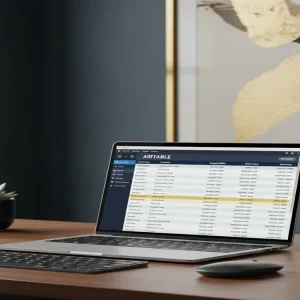
- Build Your Database in Airtable or Notion: Use Airtable if you want a powerful, filterable database that feels like a professional tool. Use Notion if you want a more aesthetic, document-style layout. These tools allow you to create different views (Gallery, Grid, Kanban) that make the data easy to navigate for your customers.
- Create Your Storefront with Gumroad or LemonSqueezy: You don’t need a complex website. A simple landing page on Carrd or a direct product page on LemonSqueezy is enough. Connect your Airtable or Notion link so that it is automatically delivered to the customer upon purchase. Ensure your sales copy focuses on the *time saved* rather than just the number of entries.
- Implement the “Free-to-Paid” Marketing Loop: Give away a small portion of your directory for free (e.g., the first 10 entries) in exchange for an email address. Use this email list to nurture leads and pitch the full, “Pro” version of your directory. Share snippets of your data on LinkedIn and X (formerly Twitter) to establish yourself as the authority in that niche.
Realistic Earnings and Timelines
Let’s talk numbers because that’s why you’re here. A well-positioned micro-directory typically sells for between $47 and $147. If you price your product at $97 and sell just 21 copies a month, you are hitting that $2,000 mark. In a niche with thousands of potential buyers, 21 sales is incredibly conservative. Most successful curators see their first sale within 14 to 30 days of launching their landing page.
Initially, you’ll spend about 20-30 hours on research and setup. After that, maintenance usually takes less than 2 hours a week. I’ve seen creators scale these libraries to $5,000+ per month by adding “Premium Updates” or a subscription model where users pay annually to access the most current data. The sky is the limit once you own the data.
Your Essential Tool Stack
- Airtable: The gold standard for creating filterable, professional databases.
- Carrd: A simple, one-page website builder for your landing page.
- LemonSqueezy: For handling payments, taxes, and digital product delivery.
- Apollo.io: Excellent for sourcing B2B contact data and lead lists.
- Hunter.io: To verify email addresses and ensure your directory data is accurate.
Common Mistakes to Avoid
Going Too Broad
If your directory is for “Small Business Owners,” it’s too broad. If it’s for “Boutique Coffee Shop Owners in the Pacific Northwest,” you’ve found a winner. Specificity is your greatest marketing tool. The more specific you are, the less competition you have and the more you can charge.
Neglecting Data Hygiene
Nothing kills a directory business faster than dead links and outdated information. Set a schedule—perhaps once a month—to go through your database and verify the entries. If your customers find that 20% of your list is useless, they will ask for refunds and leave bad reviews. High-quality data is your brand.
The “Set and Forget” Trap
While this is passive income, it isn’t “no-work” income. You still need to market your product. Many people build a beautiful directory and then wait for people to find it. You must actively participate in the communities where your audience hangs out. Provide value first, and the sales will follow naturally.
Stop Researching and Start Curating
The difference between a consumer and a creator is organization. You are already consuming vast amounts of information every day. Why not organize it and get paid for it? The Micro-Directory model is the most straightforward way to build a high-margin digital asset without needing complex technical skills or a massive following.
Your next step is simple: Open a blank document and list three niche topics you know more about than the average person. Pick the one with the most commercial potential and start your first 10 entries today. Your $2,000/month asset is waiting to be built.