The Invisible Real Estate Market Hidden in Plain Sight
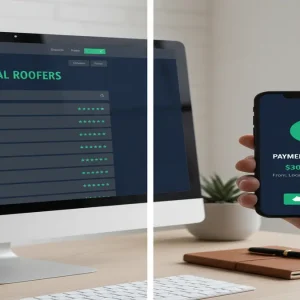
While everyone else is fighting for pennies in the saturated world of Amazon FBA or generic blogging, a small group of savvy digital entrepreneurs is quietly claiming high-value ‘digital land’ in local markets. Imagine owning a simple, one-page website that ranks #1 for ’emergency tree removal in Orlando’ and then renting that traffic to a local contractor for $500 a month. This isn’t just a theory; it is the reality of local lead generation directories, a business model that allows you to act as a digital landlord without ever swinging a hammer or dealing with physical inventory. Here is the thing: small business owners are desperate for customers, but they are usually terrible at SEO, which creates a massive opportunity for you to bridge the gap.
📹 Watch the video above to learn more!
What Exactly is a Local Lead Generation Directory?
A local micro-directory is a high-intent, niche-specific website designed to capture local search traffic and funnel it to service providers. Instead of building a massive site about ‘home improvement,’ you build a hyper-focused directory specifically for ‘fence repair’ or ‘epoxy flooring’ in a mid-sized city. You aren’t selling a product; you are selling the phone calls and emails that come through the site. By utilizing ‘Shadow Search’—those specific, high-urgency queries that local businesses rely on—you create an asset that generates value 24/7. Once the site ranks on the first page of Google, it becomes a digital storefront that you can ‘rent’ to a local professional who is hungry for more work.
Why This Model Crushes Traditional Freelancing
The best part about this strategy is the shift from trading time for money to building recurring revenue. When you freelance, your income stops the moment you stop working. With micro-directories, the heavy lifting is done upfront during the setup and ranking phase. Once the site is live and the SEO kicks in, your maintenance time drops to nearly zero. Furthermore, you have total control; if a contractor stops paying their monthly ‘rent,’ you simply swap out their phone number for their competitor’s number. You own the asset, the traffic, and the leads, which gives you ultimate leverage in the negotiation process. It is a scalable system where each new site adds another predictable layer to your monthly income.
How to Build Your Digital Rental Empire in 5 Steps
Step 1: Uncover the ‘Unsexy’ High-Value Niches
Your first task is to find niches that have high ticket prices but low digital competition. Stay away from ‘lawyers’ or ‘dentists’—the competition is too fierce. Instead, look for service-based businesses where a single job is worth $1,000 or more, such as foundation repair, mold remediation, or luxury landscaping. Use tools like the Google Keyword Planner to find cities with a population between 100,000 and 500,000 where the ‘Map Pack’ (the top 3 local results) isn’t fully optimized. If the top results have few reviews and no website, you’ve found your goldmine.
Step 2: Build Your Ghost Directory Framework
You don’t need a complex 50-page website to start. Use a lightweight builder like Carrd or Webflow to create a clean, conversion-focused landing page. Your goal is to make it look like a professional directory for that specific city and service. Include a clear headline, a list of benefits for the customer, and a prominent ‘Get a Free Quote’ form. The key here is to build the site *before* you have a client. This allows you to rank the site and prove its value with real data before you ever approach a business owner.
Step 3: Deploy Programmatic SEO for Hyper-Local Dominance
To scale quickly, you need to use programmatic SEO techniques. This involves creating template pages for different neighborhoods or surrounding suburbs within your target city. By using Airtable linked to Webflow, you can generate 20-30 landing pages in minutes, each targeting a specific sub-locale (e.g., ‘Fence Repair in [Neighborhood Name]’). This ‘long-tail’ approach captures the specific searches that competitors often ignore, allowing you to dominate the entire local region rather than just the city center.
Step 4: The ‘First Lead is Free’ Strategy
Once your site starts generating traffic and phone calls, you need to monetize it. Instead of a cold sales pitch, use the ‘Proof of Concept’ method. Find a highly-rated local business on Yelp or Google Maps and send them the first 3-5 leads for free. Call them up and say, ‘I have a website that just generated three inquiries for kitchen remodeling in your area; I’ve sent them to your email for free so you can see the quality.’ This removes all friction and builds immediate trust. Once they close a deal from your leads, the conversation about a monthly retainer becomes incredibly easy.
Step 5: Transition to a Monthly Rental Model
After proving the value, offer the business owner an exclusive ‘rental’ agreement. For a flat fee—typically between $500 and $1,500 per month depending on the niche—you will redirect all calls and form submissions exclusively to them. This provides them with a predictable flow of customers without them having to learn marketing. For you, it creates a ‘set it and forget it’ income stream. Once one site is stabilized, you simply repeat the process in a new city or a different niche.
Realistic Earnings Potential and Timelines
This is not an overnight riches scheme, but it is highly predictable. Typically, it takes 30 to 60 days to see your first organic leads as Google indexes your site. By month three, you should have enough data to secure your first tenant. A single site in a mid-tier niche usually commands $500/month. To reach the $4,000/month mark, you need to build and rank 8 successful micro-directories. If you launch two sites per month, you can realistically hit this income level within 6 to 8 months. Your initial investment is minimal—roughly $100 for domains and hosting—making the profit margins nearly 95%.
Your Essential Toolkit for Success
- Ahrefs or SEMRush: Essential for analyzing local keyword difficulty and competitor backlinks.
- Webflow: The best platform for building SEO-friendly, scalable directory sites.
- CallRail: Used to track and record phone calls so you can prove exactly how many leads you sent.
- BrightLocal: A specialized tool for tracking your rankings in the local Google Map Pack.
- Hunter.io: To find the direct email addresses of local business owners for your outreach.
Common Pitfalls to Avoid
One major mistake is picking a niche with a low ‘average order value.’ If a service only costs $50 (like lawn mowing), the business owner won’t be able to afford a $500 monthly rental fee. Stick to high-ticket services. Another error is neglecting mobile optimization; over 70% of local service searches happen on smartphones, so your site must load instantly and have a ‘click-to-call’ button. Lastly, don’t try to compete in massive cities like New York or Los Angeles right away. Start in ‘Tier 2’ cities where the competition is significantly lower and you can rank much faster.
Ready to Claim Your Digital Land?
The window for easy local SEO dominance is closing as more people move online, but right now, thousands of local niches remain completely unoptimized. Stop building assets for other people and start building your own portfolio of digital rental properties. Your next step is simple: pick one ‘unsexy’ niche today—like septic tank cleaning or stump grinding—and find a city with 200,000 people where the top Google results look outdated. That is your first $500/month opportunity waiting to be claimed.