The High-Value Secret Hiding in Plain Sight
You’ve likely heard that ‘data is the new oil,’ but nobody tells you how to pump it without a degree in data science. What if I told you that a curated list of 200 specific contacts is worth more than a 50-page ebook? It’s true. While everyone else is fighting over the same $17 ‘How to Grow on Instagram’ PDF, a silent group of entrepreneurs is selling structured databases to hungry B2B markets for hundreds of dollars per seat. I recently watched a solo founder build a directory of sustainable packaging suppliers and sell access to it for $2,400 in his first 30 days. He didn’t write a single blog post; he just solved a massive ‘search fatigue’ problem for e-commerce brands.
📹 Watch the video above to learn more!
The reality is that we are drowning in information but starving for organization. People are tired of Googling for hours only to find outdated or irrelevant results. When you provide a curated, verified, and structured database, you aren’t just selling information; you’re selling time and certainty. This is what I call ‘Niche Logic Arbitrage,’ and it is currently one of the most underserved opportunities in the digital economy. If you can use a browser and a spreadsheet, you can build a high-margin digital asset that pays you monthly without the headache of traditional content creation.
What Exactly is a Curated Database?
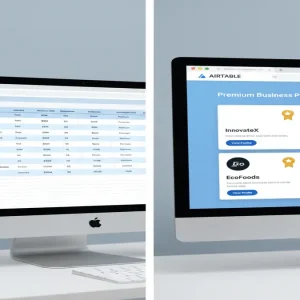
At its core, this business model involves identifying a specific group of people who need specific resources and putting those resources into a functional, searchable format. Think of it as a ‘private Google’ for a very narrow topic. Instead of a messy list of links, you provide a structured environment—usually via Airtable or a simple web portal—where users can filter by price, location, certification, or specialty. For example, instead of a blog post about ‘How to find influencers,’ you build a database of 500 micro-influencers in the vegan fitness space, complete with their engagement rates, contact emails, and past brand collaborations.
The Difference Between Data and Insights
It’s important to understand that you aren’t just ‘scraping’ the web and dumping it into a file. The value lies in the curation. You are the gatekeeper who verifies that the emails work, the companies are still in business, and the data points are accurate. This human-verified element allows you to charge a premium. Businesses will gladly pay $200 for a list of 50 verified leads rather than spending 20 hours of an employee’s time trying to find them manually. You are effectively acting as a high-end researcher for hire, but you only have to do the research once and can sell it a thousand times.
Why This Model Beats Traditional Digital Products
Why should you choose this over selling a course or a traditional ebook? The best part is the perceived value. Ebooks are often seen as ‘entertainment’ or ‘general education,’ which caps their price point. A database, however, is a utility. It is a tool that a business owner uses to make money. When a product is directly tied to a company’s revenue or saved time, the price sensitivity drops significantly. You aren’t competing with $10 Kindle books; you’re competing with the cost of a virtual assistant or a specialized software subscription.
Low Competition and High Barriers to Entry
Most ‘get rich online’ schemes focus on things that are easy to start, like dropshipping or basic affiliate marketing. This creates a saturated market. Curating a high-quality database requires a bit of ‘boring’ work—researching, verifying, and organizing. Because it feels like work, most people won’t do it. This leaves the field wide open for you. Once you’ve built the database, it becomes a ‘moat’ around your business. It’s hard for someone to copy you because they’d have to put in the same dozens of hours of manual verification that you did.
How to Get Started in 5 Actionable Steps
-
Identify the ‘Information Gap’
Look for industries where people are constantly asking for recommendations in Facebook groups or on Reddit. Are people asking for ‘reliable manufacturers in Vietnam’? Are they looking for ‘angel investors for SaaS startups’? Find a niche where the information is public but scattered across a hundred different websites. The more ‘boring’ the industry, the higher the profit potential usually is.
-
The ‘Lazy’ Data Collection Method
You don’t need to manually type everything. Use a tool like Instant Data Scraper (a free Chrome extension) to pull initial lists from directories or LinkedIn. Once you have the raw data, use a service like Hunter.io to find and verify email addresses. Remember, your job is to clean this data. Remove the duplicates, fix the formatting, and ensure every entry adds value to the end user.
-
Structure Your Asset in Airtable
Don’t just use a Google Sheet; it looks too ‘cheap.’ Move your data into Airtable. This allows you to create different ‘views’ (like a gallery view or a kanban board) and allows your users to filter the data easily. You can then use a tool like Softr to turn that Airtable base into a beautiful, professional-looking website without writing a single line of code. This makes your product feel like a high-end software tool rather than a simple list.
-
Set Up Your Paywall
You don’t need a complex e-commerce setup. Use Gumroad or LemonSqueezy to handle payments. You can either sell ‘lifetime access’ for a flat fee (e.g., $149) or a subscription for monthly updates (e.g., $29/month). If you choose the subscription model, you’ll need to commit to adding 20-50 new entries to the database every month to keep the value high.
-
The ‘Value-First’ Outreach
Forget spammy ads. Go to where your target audience hangs out (LinkedIn, niche forums, or Slack communities). Instead of saying ‘Buy my list,’ offer a ‘teaser.’ Give away 10 entries for free in exchange for an email address. Once they see the quality and the time it saves them, the upsell to the full 500-entry database becomes an easy ‘yes.’
Realistic Earnings Potential
Let’s talk numbers because that’s what matters. A typical niche database can be priced anywhere from $49 to $499 depending on the industry. If you target a B2B niche (like ‘Construction Tech Startups’) and price your access at $150, you only need 16 sales a month to hit $2,400. That’s roughly one sale every two days. If you build three of these databases in different niches, you are looking at a $5,000+ monthly revenue stream with very little maintenance. The initial build takes about 20-30 hours of focused work, but once it’s live, your only job is occasional data cleaning and marketing.
Required Tools and Resources
- Instant Data Scraper: For pulling raw data from the web quickly.
- Airtable: To host and organize your database professionally.
- Softr: To turn your data into a searchable, gated web portal.
- Hunter.io: For verifying professional email addresses.
- Gumroad: To process payments and deliver access automatically.
Common Mistakes to Avoid
- Going Too Broad: Don’t try to build a ‘List of all businesses in New York.’ You will fail. Instead, build a ‘List of all boutique interior design firms in Brooklyn using sustainable materials.’ Specificity is your greatest marketing asset.
- Neglecting Data Quality: If 20% of your links are broken or emails bounce, your reputation is toast. Spend the extra time to manually check your top 50 entries. Quality over quantity always wins in the database game.
- Over-Engineering the Tech: You don’t need a custom-coded app. Use no-code tools. Your customers don’t care about the code; they care about the data. If the data is good, they would buy it even if it was written on a napkin.
Take Your First Step Today
The bridge between where you are and your first $1,000 online isn’t a complex funnel or a viral video; it’s a well-organized spreadsheet. Your next step is simple: spend 30 minutes on Reddit or industry forums today and look for people asking ‘Where can I find a list of…?’ That question is the sound of money hitting the floor. Pick one niche, start a trial of Airtable, and begin curating. You’ll be surprised how quickly ‘boring’ data turns into an exciting income stream.