The Invisible Gap in the Local Business Market
Did you know that the average local service business—your neighborhood pet groomer, HVAC contractor, or independent bakery—loses up to 20% of their annual revenue simply because they lack basic digital systems? While the rest of the internet is fighting over pennies in saturated affiliate markets, local business owners are literally drowning in paper receipts and missed appointments. They don’t need a complex AI strategy; they need a simple, digital ‘brain’ to run their daily operations. I discovered that by packaging my basic organizational skills into a $197 ‘Operations-in-a-Box’ kit, I could build a recurring income stream that most digital nomads completely overlook.
📹 Watch the video above to learn more!
What is an Operations-in-a-Box Kit?
Here’s the thing: most local business owners are experts at their craft but terrible at administration. An ‘Operations-in-a-Box’ kit is a pre-configured, niche-specific workspace built on a platform like Notion or Airtable. It isn’t just a template; it’s a complete digital infrastructure. Imagine giving a dog groomer a single dashboard where they can track client vaccinations, manage employee shifts, inventory their shampoos, and see their daily profit margins at a glance. You aren’t selling software; you’re selling the feeling of finally being in control of their chaotic workday. It’s a ‘set it and forget it’ digital asset for you, and a life-saver for them.
Why This Method Outperforms Traditional Freelancing
The best part? Unlike traditional freelancing, you aren’t trading your hours for dollars. Once you build the master framework for a specific niche—let’s say, independent coffee shops—you can sell that exact same framework to 500 different coffee shops across the country. There is no custom coding, no long-term project management, and no ‘scope creep.’ It’s a productized service that addresses a painful, high-stakes problem. Local owners are often tech-averse, meaning they won’t go looking for these tools themselves, but they will happily pay for a plug-and-play solution that someone explains to them in plain English.
The Psychology of the ‘Boring’ Niche
Why focus on ‘boring’ businesses like plumbing or landscaping? Because these industries are recession-proof and flush with cash, yet they are often the last to adopt modern efficiency tools. While everyone else is trying to sell marketing services to ‘coaches’ who have no budget, you are providing operational stability to businesses that have been around for 20 years. When you show a business owner how your kit saves them five hours of paperwork a week, the $197 price tag becomes an absolute no-brainer. You’re effectively trading a one-time payment for hundreds of hours of their life back.
How to Get Started in 5 Actionable Steps
Step 1: Pick Your ‘Unsexy’ Niche
Don’t try to build a general ‘business planner.’ Instead, pick one specific micro-niche. Think: mobile car detailers, boutique florists, or residential cleaning services. The more specific you are, the higher your perceived authority. Spend three days researching their specific pain points by joining their private Facebook groups or browsing their industry forums. What are they complaining about? Usually, it’s scheduling, inventory tracking, or client follow-ups.
Step 2: Build the ‘Single Source of Truth’
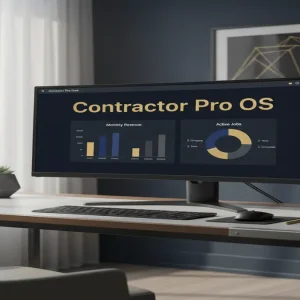
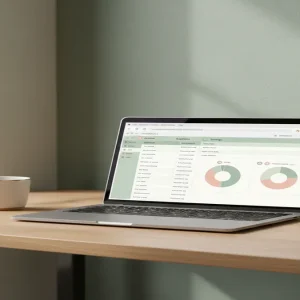
Use Notion to build your framework. Create a central dashboard that links to four essential databases: a CRM for client details, an Inventory Tracker, a Financial Ledger for daily expenses, and a Task Manager for staff. Keep the design clean and professional. Use high-contrast colors and clear labels. Remember, your client might be using this on a tablet in a dusty workshop, so it needs to be functional over flashy. Include a ‘Start Here’ page with embedded video instructions.
Step 3: Create the ‘Instructional Overlay’
A template alone isn’t worth $197, but a system is. Use a tool like Loom to record five-minute ‘How-To’ videos for every section of your kit. Show them exactly how to add a new client, how to check if they’re low on supplies, and how to read their monthly profit summary. This reduces your support tickets to near zero and makes the product feel like a premium, guided experience. You are essentially acting as a digital consultant without the hourly meetings.
Step 4: The ‘Beta-Test’ Validation
Before you go wide, find one local business owner in your chosen niche. Offer them the kit for free in exchange for a video testimonial and feedback. This is crucial. They will tell you exactly what’s missing—maybe you forgot a ‘pet allergy’ field for the groomers or a ‘square footage’ calculator for the cleaners. Fix those gaps, grab that testimonial, and you now have the social proof needed to sell to strangers.
Step 5: Low-Friction Outreach
You don’t need expensive ads. Use LinkedIn to find owners of businesses in your niche. Send a short, personalized message: ‘I noticed many [Niche] owners struggle with tracking [Specific Pain Point]. I built a digital system specifically for this—would you be open to seeing a 2-minute video of how it works?’ When they say yes, send the Loom link. Link your Gumroad or Stripe checkout directly under the video. It’s a low-pressure, high-value approach.
Realistic Earnings Potential
Let’s talk numbers. This is not a ‘get rich overnight’ scheme, but it is highly scalable. If you sell your kit for $197—a price point that doesn’t require a board meeting for a small business owner to approve—you only need 15 sales a month to hit nearly $3,000 in revenue. Many creators in this space reach their first $1,000 within 30 days of launching their beta. Once the system is built, your only cost is your $10/month Notion subscription and a small transaction fee from your payment processor. As you collect more testimonials, you can easily bump the price to $297 or $497 for more complex industries like construction or dental clinics.
Required Tools and Resources
- Notion: The core platform for building your digital kits.
- Loom: For creating the essential video walkthroughs and sales demos.
- Gumroad or Stripe: To handle payments and automated digital delivery.
- Canva: For creating professional-looking dashboard icons and promotional graphics.
- LinkedIn: Your primary engine for finding and contacting niche business owners.
Common Mistakes to Avoid
Over-Engineering the Solution
The biggest mistake is making the system too complex. If a business owner sees 50 different buttons and complex formulas, they will get overwhelmed and never use it. Keep it simple. If it takes more than 10 minutes to learn, it’s too complicated. Focus on solving the three biggest problems, not thirty minor ones.
Targeting ‘Broke’ Niches
Avoid niches that are struggling to survive. You want to target businesses that are busy—so busy they don’t have time to organize. If they are already making money but losing it through the cracks, they are your perfect customer. If they have no customers, your organizational kit won’t help them, and they won’t buy it.
Forgetting the Mobile Experience
Most local business owners are on their feet all day. If your Notion kit doesn’t look good or function well on the Notion mobile app, it’s useless to them. Always test your databases on your phone to ensure buttons are clickable and data entry is fast while on the move.
Your Next Step Toward Passive Revenue
The gap between you and a $3,000/month digital product business is simply choosing a niche. Don’t overthink the tech or the marketing. Pick one ‘boring’ industry today, find their biggest headache, and start building a simple solution. Your first step is to spend 30 minutes on Reddit or Facebook groups for a specific trade (like ‘Landscaping Business Owners’) and list the top three things they complain about. That list is your product roadmap. Ready to build your first kit?