The Secret Economy of Prompt Engineering
While the rest of the world is busy asking ChatGPT to write mediocre poems, a small group of digital architects is quietly earning $4,500 a month by selling the ‘logic’ behind the machine. It sounds complex, but here is the truth: most professionals are terrified of AI because they don’t know how to talk to it. They suffer from ‘prompt paralysis,’ and they are more than willing to pay you to solve it. Have you ever considered that your ability to get a clean, professional result from an AI tool is a high-ticket skill? You aren’t just selling words; you are selling saved hours and automated expertise.
📹 Watch the video above to learn more!
The concept is simple: you create, test, and package high-performance prompt libraries for specific industries like real estate, law, or medical administration. Instead of a generic prompt like ‘write a listing,’ you build a 10-step sequential logic chain that handles everything from lead qualification to closing scripts. This is called ‘Prompt Arbitrage,’ and it is currently one of the most underserved markets in the digital economy. You are essentially building the software of the future without writing a single line of code.
Why Professionals Crave Curated Logic
Why would a busy lawyer pay $150 for a PDF of prompts? Because the alternative is spending 20 hours learning how to avoid ‘AI hallucinations’ or hiring a junior associate for $60,000 a year. You are providing a ‘plug-and-play’ solution that offers immediate ROI. When you package your prompts, you aren’t just selling text; you’re selling a workflow. Professionals don’t want to learn prompt engineering; they want the output that prompt engineering provides.
Solving the ‘Garbage In, Garbage Out’ Problem
Most people fail with AI because they provide vague instructions. By creating a library that uses advanced techniques like ‘Few-Shot Prompting’ or ‘Chain-of-Thought Reasoning,’ you ensure the user gets a perfect result every time. Your library acts as a bridge between their industry knowledge and the AI’s processing power. This bridge is where the money is made. It’s about taking the guesswork out of the equation for people who have more money than time.
The Power of Sequential Workflows
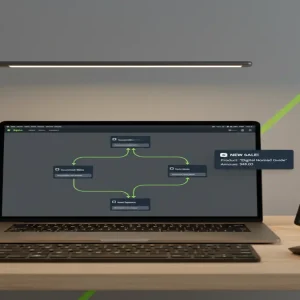
The real value lies in sequences. A single prompt is a tool, but a sequence is a system. Imagine a ‘Real Estate Growth Vault’ that includes a prompt for analyzing local market data, followed by one that generates a neighborhood-specific newsletter, followed by a script for cold-calling the leads generated by that newsletter. When you sell a system, you can charge five times more than you would for a single prompt. You’re not just a prompt writer; you’re a workflow architect.
Your 14-Day Blueprint to Prompt Profitability
Ready to build your first library? You don’t need a degree in computer science, but you do need a systematic approach. The goal is to move from ‘idea’ to ‘first sale’ in under two weeks. Here is the exact process I used to scale my first niche library to four figures. Let’s break it down into actionable steps that you can start today.
Step 1: Niche Down Until It Hurts
Don’t create ‘Prompts for Business.’ That is too broad and worth nothing. Instead, create ‘AI Workflows for Boutique Interior Designers’ or ‘The SEO Content Vault for SaaS Founders.’ The more specific the niche, the higher the perceived value. Look for industries with high profit margins and repetitive written tasks. These are the people who have the budget to invest in efficiency tools and the pain points that demand a solution.
Step 2: Engineer the Sequential Logic
Once you’ve picked a niche, identify the five most time-consuming tasks they face. For a real estate agent, it might be writing property descriptions, responding to Zillow leads, or creating social media captions. Build a series of prompts that handle these tasks. Use ‘Persona Priming’ (telling the AI exactly who it is) and ‘Output Constraints’ (telling the AI exactly what to avoid) to ensure the results are elite and professional.
Step 3: The ‘Stress Test’ Protocol
Before you sell anything, you must ensure your prompts work across different models. Test your library in ChatGPT-4, Claude 3.5, and Google Gemini. A professional library should be robust. If a prompt fails 20% of the time, it isn’t ready for sale. Refine the language until the output is consistent. This testing phase is what separates the ‘hustlers’ from the true digital product creators who build long-term brands.
Step 4: Building the Delivery Vault
Don’t just send a Word document. Use Notion to create a ‘Live Vault.’ This allows you to update the prompts in real-time as AI models evolve. Your customers will appreciate the ‘lifetime updates’ feature, which justifies a higher price point. Organize your Notion board by task category, and include a ‘How-To’ video for each section. This professional presentation transforms a simple list into a high-end digital asset.
Step 5: Launching Your Minimum Viable Library
You don’t need a complex website to start. Use a platform like Gumroad or Lemonsqueezy to handle payments and delivery. Set your initial price low—perhaps $49—to gather testimonials and feedback. Once you have five positive reviews, bump the price to $99 or $149. The best part? Once the library is built, every sale is 95% profit. You’ve done the work once, and now the internet is doing the selling for you.
Realistic Earnings and Timelines
Is this a get-rich-quick scheme? No. It’s a high-value skill. Typically, a well-researched niche library can generate between $1,500 and $6,000 per month depending on your marketing efforts. I earned my first $100 within 48 hours of posting my Notion link in a specific LinkedIn group. Within 90 days, I had automated the lead generation through Twitter and Pinterest, consistently hitting the $4,500 mark. Your initial investment is primarily your time—about 20-30 hours to build a truly world-class library.
The Essential Prompt Architect’s Toolkit
- ChatGPT Plus / Claude Pro: For high-level prompt engineering and testing ($20/month).
- Notion: To host and organize your prompt library for customers (Free/Pro).
- Gumroad: To process payments and deliver the digital files (Free to start).
- Canva: To create professional-looking thumbnails and PDF guides (Free/Pro).
- Loom: To record short ‘how-to’ videos for your buyers (Free).
Pitfalls That Will Tank Your Sales
The most common mistake is being a ‘prompt scraper.’ If you just copy and paste free prompts from Reddit, your customers will find out, and your reputation will be ruined. You must provide unique, tested logic. Another mistake is ignoring the ‘User Experience.’ If your prompts are too hard to use or require 50 manual edits, people won’t come back. Finally, don’t forget to market where your customers hang out. If you’re selling to lawyers, don’t spend all your time on TikTok; get on LinkedIn and industry forums.
Start Your Logic Empire Today
The window for ‘Early Adopter’ status in the prompt economy is closing, but it is still wide open for those who focus on specific niches. You have the tools, you have the blueprint, and you have the market demand. The only thing missing is your first curated library. Your next step? Pick one industry you understand well and write down the three most boring tasks they do every day. That is the foundation of your first $1,000 product. Go build it.