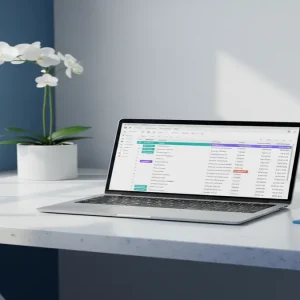
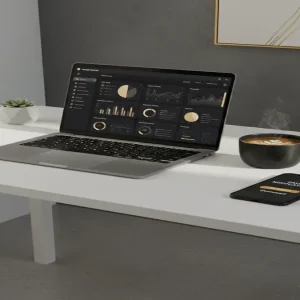
The Invisible Goldmine of Cognitive-Specific Digital Assets
You’ve heard the advice a thousand times: ‘Build a digital product and sell it while you sleep.’ But here is the cold, hard truth that most gurus won’t tell you: the market for generic ‘Daily Planners’ is dead, buried under a mountain of five-dollar Etsy listings. However, while the general market is saturated, a massive, underserved demographic is literally begging for solutions to their specific cognitive hurdles. Last month, a single Notion template designed specifically for neurodivergent professionals generated $4,200 in revenue with zero dollars spent on traditional advertising. This isn’t just about ‘making a list’; it is about engineering a digital environment that works with a person’s brain, not against it.
📹 Watch the video above to learn more!
The secret lies in the ‘ADHD Productivity Loop’—a niche market opportunity where you create highly specialized systems for people who struggle with executive dysfunction. Most productivity tools are built for neurotypical brains, focusing on linear progression and rigid scheduling. By pivoting to create tools for the neurodivergent community, you aren’t just selling a file; you are selling a functional lifestyle change. Let me show you how this micro-business model functions and why it is currently one of the most profitable corners of the digital economy.
Why Specificity is Your Greatest Competitive Advantage
Why does a specific Notion template sell for $49 when a generic one sells for $5? The answer is the ‘Relatability Premium.’ When a potential customer sees a product that uses their specific language—terms like ‘body doubling,’ ‘time blindness,’ or ‘dopamine menu’—they immediately feel understood. They aren’t just buying a database; they are buying a tool that promises to lower their daily anxiety. The best part? You don’t need to be a certified psychologist to enter this space; you just need to be a problem solver who understands the workflow of a specific niche.
Solving the Executive Dysfunction Puzzle
Traditional planners fail neurodivergent users because they require consistency, which is the very thing these users struggle with. Your digital product succeeds by being ‘low-friction.’ This means creating systems in Notion that allow for ‘brain dumping’ and visual organization rather than just rows of dates. When you solve a pain point this deep, price sensitivity disappears. Your customers aren’t comparing you to a $2 notebook; they are comparing you to the cost of their lost productivity and missed deadlines.
The Power of Community-Driven Development
Unlike massive software companies, you have the agility to listen to a specific community on Reddit or TikTok and build exactly what they ask for. This ‘build-in-public’ approach creates a feedback loop that makes your product better with every iteration. By the time you launch, you already have a waiting list of people who helped you design the features. This isn’t just marketing; it’s co-creation, and it’s why these templates have such high conversion rates.
How to Build and Launch Your First Specialized System
Getting started doesn’t require a degree in software engineering or a massive social media following. It requires an observant eye and a basic understanding of Notion’s relational databases. If you can link a page to a table, you have the technical skills necessary to build a high-ticket digital asset. Here is the exact blueprint to go from zero to your first $1,000 month.
- Identify Your Micro-Niche: Don’t just target ‘ADHD.’ Narrow it down to ‘ADHD for Freelance Writers’ or ‘Executive Function Tools for Graduate Students.’ The narrower the niche, the higher the perceived value.
- Architect the ‘Low-Friction’ System: Open Notion and build a workspace that prioritizes quick-capture buttons. Use ‘Formula’ properties to create visual progress bars that provide immediate dopamine hits. Remember, the goal is to make the tool feel like a game, not a chore.
- Create a ‘Walkthrough’ Asset: Don’t just give them a template link. Record a 10-minute video using a tool like Loom explaining exactly how the system manages their specific stressors. This adds immense perceived value and reduces refund requests.
- Set Up Your Automated Storefront: Use a platform like Gumroad or Lemon Squeezy. These platforms handle all the VAT, taxes, and file delivery automatically. You simply provide the Notion ‘Duplicate’ link in the delivery email.
- Seed the Market Organically: Go to where your niche hangs out. Don’t post ‘Buy my stuff.’ Instead, post a screenshot of your system with the caption: ‘I finally figured out how to stop missing deadlines with my ADHD brain.’ Wait for the comments to ask for the link.
Realistic Earnings and Growth Timelines
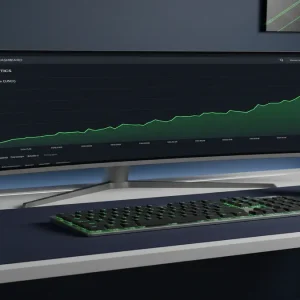
Let’s talk numbers, because transparency is vital in the online business world. For a specialized Notion template priced between $35 and $55, you can realistically expect to see your first sale within 7 to 14 days of active organic promotion. A typical ‘successful’ niche template usually sees a growth curve like this: Month 1 involves heavy testing and yields $200-$500. By Month 3, once you have gathered testimonials and refined your SEO on marketplaces like Notion Utopia or Etsy, reaching $2,000 a month is standard. Scaling to $5,000+ requires building a small ‘ecosystem’ of related templates or a subscription-based ‘Vault’ where you add new modules monthly.
Initial Investment Requirements
The financial barrier to entry is incredibly low. You will need a Notion ‘Plus’ plan (around $10/month) to host larger files and images, and a free Gumroad account. Your biggest investment is time—specifically about 20-30 hours of development and testing to ensure the template doesn’t ‘break’ when a user duplicates it. Compared to the thousands of dollars required for e-commerce inventory, this is a high-margin, low-risk play.
Essential Tools for Your Digital Factory
- Notion: The core engine where you build the actual product.
- Gumroad: The most beginner-friendly platform for selling digital downloads with built-in affiliate features.
- Canva: Essential for creating high-quality ‘mockups’ that show your template inside a MacBook or iPad screen.
- Loom: For recording the ‘How-To’ videos that differentiate your product from cheap alternatives.
- Pinterest: A secret weapon for driving long-term, passive traffic to your digital products through aesthetic ‘productivity’ pins.
Common Pitfalls to Avoid
Even with a great idea, many creators fail because they fall into the ‘Complexity Trap.’ They build systems so intricate that the user feels overwhelmed just looking at them. Remember, your customer is already overwhelmed; your product should be the cure, not the cause. Secondly, avoid the ‘Build and Pray’ method. If you aren’t actively talking to your target audience on social media, no one will find your store. Finally, never ignore mobile optimization. Many users will check their Notion tasks on their phones, so ensure your layout looks as good on a vertical screen as it does on a desktop.
Your Next Move Toward Passive Revenue
The transition from a consumer to a creator happens the moment you realize that your unique way of organizing your life is actually a sellable asset. You don’t need a massive audience; you just need a specific solution for a specific group of people. Here is your immediate next step: Spend the next 60 minutes browsing the ‘ADHD’ or ‘Productivity’ subreddits. Look for people complaining about their current tools. That complaint is your first product idea. Start building the solution today, and you could be looking at your first automated deposit by next week.