The High-Ticket Secret Most Digital Product Sellers Miss
Have you ever noticed how the most successful entrepreneurs seem to have an invisible infrastructure supporting their every move, while everyone else is drowning in sticky notes and browser tabs? Here is a hard truth: the world is currently facing an ‘executive function’ crisis, and people are now willing to pay a premium for someone to organize their brain for them. I am not talking about selling a $5 aesthetic habit tracker on Etsy; I am talking about building high-ticket ‘System-as-a-Product’ (SaaP) assets that solve deep cognitive friction for neurodivergent business owners. Last month, while generic planners were struggling to make a single sale, specialized ‘Operating Systems’ were generating $4,000 to $7,000 in pure profit with zero inventory.
📹 Watch the video above to learn more!
What is a System-as-a-Product?
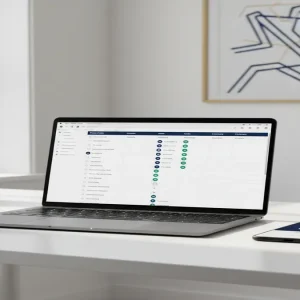
A System-as-a-Product is more than just a template; it is a pre-configured workflow designed to handle a specific business or life function from start to finish. Instead of giving someone a blank digital notebook, you are giving them a specialized machine built inside a platform like Notion or Airtable. Think of it as ‘software-lite.’ You are selling the logic, the automation, and the mental clarity that comes from a perfectly organized environment. For the millions of entrepreneurs diagnosed with ADHD, these systems are not just ‘nice to have’—they are essential survival tools that prevent burnout and financial loss. When you position your digital product as a medical or professional necessity rather than a hobbyist tool, your price ceiling disappears.
The Neuro-Friction Economy: Why This Works
The reason this method is currently exploding is due to the ‘Neuro-Friction Economy.’ High-achieving individuals with ADHD often struggle with the ‘start-up cost’ of organizing a project. They have the ideas, but they lack the scaffolding. By providing that scaffolding, you are effectively selling them back their time and confidence. The best part? You don’t need to be a software developer to build these. If you can organize a folder and link a few databases, you have the technical skills required. You are getting paid for your ability to simplify complexity, which is one of the most valuable skills in the 21st century. People aren’t buying your Notion page; they are buying the feeling of finally being in control of their chaotic schedule.
How to Build Your High-Ticket Operating System
Step 1: Identify a High-Value ‘Cognitive Leak’
Your first step is to find a specific area where business owners are losing money because of disorganization. Don’t build a ‘General Life Planner.’ Instead, build a ‘Content Vault for Neurodivergent Solopreneurs’ or a ‘Tax-Ready Bookkeeping System for Creative Freelancers.’ Look for tasks that involve multiple steps, deadlines, and moving parts. These are the areas where people with executive dysfunction feel the most pain. Spend time in Reddit communities like r/ADHD or r/entrepreneur to see what people are complaining about. When you find a recurring ‘leak’—like forgetting to invoice clients or losing track of lead follow-ups—you have found your goldmine.
Step 2: Architect the ‘Dopamine-First’ Workflow
Once you have your niche, you need to build the system in Notion. The key here is ‘Dopamine-First’ design. This means the system must be visually stimulating but not cluttered, and it must provide immediate feedback. Use Notion’s ‘Button’ feature to create one-click actions that reduce the number of decisions a user has to make. For example, a single button that says ‘Start New Project’ should automatically generate a pre-tagged database entry, a task list, and a timeline. Your goal is to eliminate ‘decision paralysis’ for your customer. If they have to think too hard about how to use your system, they will abandon it, and you will get a refund request.
Step 3: The ‘Loom’ Factor Documentation
This is where you move from a $20 product to a $197 product. You must record a series of short, high-energy Loom videos explaining exactly how to use the system. Don’t just show them the features; show them the transformation. Explain how this system will save them five hours a week and reduce their late-night anxiety. By including a ‘Video Onboarding Vault,’ you are providing a level of service that generic template sellers can’t match. It makes the product feel like a guided coaching program rather than a static download. This perceived value allows you to 10x your pricing immediately.
Step 4: Launching Your Digital Storefront
Forget building a complex website. Use a platform like Gumroad or Lemon Squeezy to host your product. These platforms handle the payments, the digital delivery, and even the tax compliance for you. Your landing page should focus entirely on the ‘Before and After’ state of your customer. Use bold headlines like ‘Stop Losing Clients to Your Inbox’ or ‘The End of Project Management Paralysis.’ Once the store is live, don’t just post links. Share ‘System Tours’ on TikTok and LinkedIn, showing the satisfying ‘one-click’ features of your build. High-quality screen recordings of a smooth workflow are incredibly ‘oddly satisfying’ to watch and often go viral in productivity niches.
Realistic Earnings and Growth Potential
Let’s talk numbers because this is where it gets exciting. A well-designed, niche-specific Operating System typically retails between $97 and $297. If you price your system at $150 and make just one sale every three days, you are looking at $1,500 a month in passive income. However, most successful SaaP creators find that once they hit a niche ‘sweet spot,’ they can easily move 30 to 50 units a month. That brings your revenue to the $4,500 – $7,500 range. Your initial investment is strictly your time—roughly 15-20 hours to build the system and the videos. After that, your only ongoing task is customer support and occasional updates when Notion releases new features. You can realistically see your first sale within 14 days of launching your beta version.
Essential Tools for Your Build
- Notion: The primary platform for building your digital architecture.
- Loom: For recording your high-value video onboarding and tutorials.
- Gumroad: To host your product and process global payments securely.
- Canva: For creating professional listing images and ‘cover art’ for your templates.
- Tally.so: To collect feedback from your early beta testers.
Common Mistakes to Avoid
- Over-Engineering: Don’t add 50 databases if 5 will do. Complexity is the enemy of an ADHD-friendly system. Keep it lean and fast.
- Ignoring Mobile: Many of your users will check their systems on their phones. Ensure your layout doesn’t break on the Notion mobile app.
- Vague Marketing: If you try to sell to ‘everyone,’ you will sell to no one. Be aggressively specific about who this is for (e.g., ‘The ADHD Interior Designer’s Hub’).
Your Next Step Toward Passive Revenue
The transition from a ‘freelancer’ to a ‘digital asset owner’ starts with a single build. Instead of looking for your next client, look for your first system. Your goal this week is to identify one recurring problem you’ve solved for yourself and start mapping it out in Notion. Stop trading your hours for dollars and start building the ‘external brains’ the world is waiting for. Go into Notion right now, create a new page, and name it after the problem you are going to solve. That is your first step to a $5,000 monthly digital asset business.