The Software Empire You Can Build Without Writing Code
Did you know that a local florist in your town likely pays over $200 a month for software they absolutely hate? While the rest of the internet is fighting over saturated dropshipping niches or generic affiliate blogs, a silent group of ‘No-Code Architects’ is quietly building $6,000 monthly recurring revenue streams by solving tiny, boring problems for local businesses. You don’t need a computer science degree or a team of developers in Silicon Valley to own a software company in 2024. In fact, the less code you write, the faster you can scale this specific model.
📹 Watch the video above to learn more!
The secret lies in ‘Micro-SaaS Arbitrage.’ This isn’t about building the next Facebook; it’s about building a very simple, single-purpose tool that helps a specific business owner stop using a messy Excel spreadsheet or a physical clipboard. Here’s the thing: local business owners are drowning in manual tasks, and they are more than happy to pay a monthly subscription for a solution that saves them just three hours a week. Let me show you how this works and why it is the most overlooked passive income stream available today.
What Exactly is No-Code Micro-SaaS?
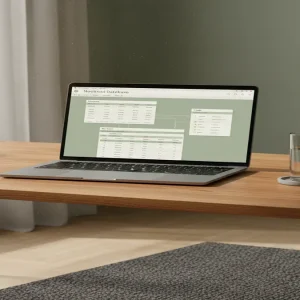
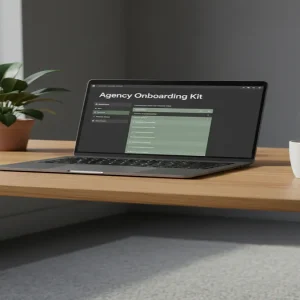
At its core, No-Code Micro-SaaS (Software as a Service) is a digital tool built using visual drag-and-drop builders like Glide, Softr, or Bubble. Instead of writing lines of Python or Javascript, you connect pre-built blocks to create functional applications. A ‘Micro’ SaaS focuses on a very narrow niche—think of an inventory tracker specifically for boutique florists, or a specialized booking app for mobile pet groomers. You aren’t competing with giants like Salesforce; you’re providing a tailor-made glove for a hand that’s currently using a one-size-fits-all mitten.
The beauty of this model is that once the app is built, it requires almost zero maintenance. You aren’t trading your hours for dollars anymore. You’re selling access to a system. When you provide a florist with a custom app that manages their delivery routes and wedding inventory, you become an essential part of their infrastructure. They don’t want to switch because your tool fits their specific workflow perfectly. That is the definition of high-value, recurring digital income.
Why This Method Outperforms Freelancing and E-commerce
Predictable Recurring Revenue
Unlike freelancing, where you have to constantly hunt for the next client, Micro-SaaS provides a ‘set it and forget it’ income stream. Once a client integrates your app into their daily routine, they stay for years. If you have 20 clients paying $300 a month, you have a $6,000 monthly income that hits your bank account on the first of every month regardless of whether you worked that day or not.
Low Competition in ‘Boring’ Niches
Most developers are trying to build the next big AI tool for other tech enthusiasts. Almost nobody is looking at the local HVAC company or the neighborhood bakery. These ‘boring’ businesses have high profit margins and very little technical expertise, making them the perfect customers for a simple, effective solution. You’re a big fish in a very small, very profitable pond.
Speed to Market
You can literally build a functional MVP (Minimum Viable Product) over a weekend. Using a platform like Glide, you can turn a Google Sheet into a professional-looking mobile app in less than 48 hours. This allows you to test ideas rapidly without spending thousands of dollars on development costs. If an idea doesn’t work, you’ve only lost a few hours of your time.
How to Get Started: Your 5-Step Blueprint
- Identify the ‘Bleeding Neck’ Problem: Don’t guess what people need. Go to a local business, like a florist or a landscaping company, and ask: ‘What is the one task you do every day on paper or in a spreadsheet that you wish was automated?’ Listen for phrases like ‘I always lose track of…’ or ‘It takes me forever to…’. That is your million-dollar app idea.
- Map the Workflow in Airtable: Before you build the app, organize the data. Use Airtable to create a database of their customers, orders, or inventory. This acts as the ‘brain’ of your application. It’s much easier to visualize the app once the data structure is clean and organized.
- Build the Interface with Glide or Softr: Connect your Airtable or Google Sheet to a no-code builder. Create a simple interface where the business owner can add new entries, view schedules, or update statuses. Keep it incredibly simple; the more features you add, the more things can break. Focus on solving that one ‘bleeding neck’ problem exceptionally well.
- The ‘Risk-Free’ Pilot Program: Approach your first prospect and offer them the app for free for 14 days. Tell them, ‘I built this specifically for florists to solve the delivery tracking issue. Try it out, and if it saves you time, we can talk about a monthly subscription.’ This low-friction entry point makes it almost impossible for them to say no.
- Scale Through Niche Authority: Once you have one florist using the app successfully, you now have a ‘case study.’ Reach out to every other florist in the state. You aren’t a salesperson anymore; you’re the person who has the specific software solution for their industry. This is how you go from $300 a month to $6,000 a month.
Realistic Earnings and Timelines
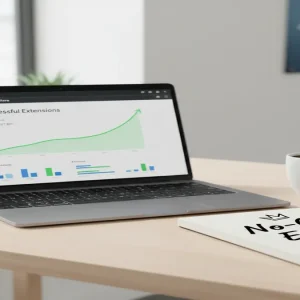
The best part? You can realistically earn your first dollar within 30 days. Most No-Code Architects charge between $250 and $500 per month per client for a specialized Micro-SaaS. If you focus on a niche with at least 1,000 potential businesses nationwide, reaching 20 clients is a conservative goal.
Monthly Potential: $5,000 – $10,000
Initial Investment: Approximately $50/month for software subscriptions (Glide/Airtable).
Skill Level: Beginner to Intermediate (No coding, but requires logical thinking).
Time to First Dollar: 14 to 45 days.
Essential Tools for Your No-Code Stack
- Glide: The best tool for turning spreadsheets into mobile-friendly apps quickly.
- Airtable: A powerful relational database that is much more robust than Google Sheets.
- Stripe: For handling your monthly recurring subscription payments automatically.
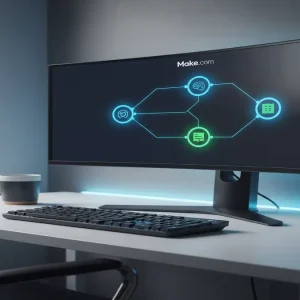
- Loom: To record quick video demos of your app to send to potential clients.
- Calendly: To let interested business owners book a 15-minute demo with you.
Common Mistakes to Avoid
The most common pitfall is ‘Feature Creep.’ You might feel the urge to add dozens of buttons and bells and whistles to justify the price. Don’t. The business owner is paying for the result (time saved), not the number of features. A cluttered app is a confusing app, and a confused client will cancel their subscription.
Another mistake is targeting ‘broke’ niches. Avoid industries with razor-thin margins like small coffee shops or independent bookstores unless they have a very specific, high-value problem. Target businesses with high ticket prices—like contractors, specialty medical clinics, or luxury service providers—who can easily justify a $300 monthly expense.
Finally, don’t forget about ‘The Handover.’ Make sure you spend 30 minutes training the staff on how to use the tool. If the employees don’t use it, the owner will eventually stop paying for it. A little bit of customer success work upfront ensures your passive income remains truly passive for the long haul.
Your Next Step to Software Ownership
The window for No-Code Arbitrage is wide open right now because most people still believe software requires a team of engineers. You have a massive head start. Your only task for today is to pick one ‘boring’ local industry and find three business owners to interview about their daily frustrations. Stop overthinking the technology and start looking for the friction in the real world. That friction is where your $6,000 monthly income is currently hidden.