The End of the $10 Digital Planner Era
You’ve been told that the only way to build a scalable digital business is to learn complex coding or raise venture capital for a SaaS startup. Here’s the reality: there is a silent group of creators earning over $6,000 a month by selling ‘Niche Operating Systems’ built entirely on existing platforms like Notion or Airtable. While the average creator is struggling to sell $10 aesthetic planners on Etsy, these savvy entrepreneurs are selling high-ticket business systems for $150 to $500 per download. The best part? You don’t need a computer science degree; you just need to understand how one specific industry works.
📹 Watch the video above to learn more!
What is a Niche Operating System (Niche OS)?
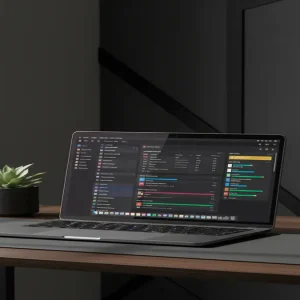
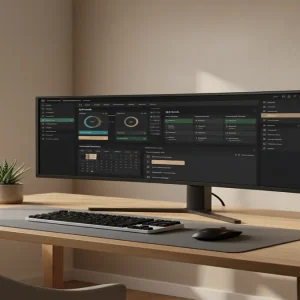
A Niche OS is what I call ‘System-as-a-Service’ (SYSaS). Instead of building a new software from scratch, you are building a pre-configured, ‘business-in-a-box’ workflow within a platform your customers already use. Imagine a wedding photographer who is drowning in emails, contracts, and editing schedules. They don’t need another app; they need a single dashboard that organizes their entire life. When you build that dashboard and sell it as a one-time purchase or a premium subscription, you aren’t just selling a template—you’re selling them their time back. This is the ultimate form of digital leverage because you build the logic once and sell it infinitely.
Why High-Ticket Systems Outperform Generic Digital Products
The market for generic ‘productivity templates’ is oversaturated and suffers from massive price compression. If you’re selling a general daily habit tracker, you’re competing with millions of free YouTube tutorials and $5 templates. However, if you build a ‘Residential Landscaping Client & Crew Management System,’ your competition drops to near zero. Business owners don’t look for the cheapest solution; they look for the one that speaks their specific language. By focusing on a niche, you move from being a ‘commodity creator’ to a ‘solution architect.’
The Psychology of the Business Buyer
Service providers—like interior designers, consultants, or HVAC contractors—are often ‘tech-hesitant’ but desperate for organization. They are willing to pay a premium (often $200+) for a system that is already 90% built for their specific workflow. They aren’t buying the software; they are buying your expertise in their industry. When they see a dashboard that already has sections for ‘Permit Tracking’ or ‘Fabric Samples,’ they immediately see the value. This specificity is exactly why these systems command such high prices compared to general-purpose tools.
How to Build and Launch Your First Niche OS
-
Identify a ‘Messy’ Service Industry
Look for industries that still rely heavily on spreadsheets, paper notes, or fragmented apps. Good examples include boutique travel agencies, independent property managers, or specialized medical consultants. The messier their current process, the more valuable your solution will be. Spend a week lurking in their specific Facebook groups or subreddits to hear what they complain about most. Are they losing track of leads? Is their project hand-off broken? That’s your goldmine.
-
Architect the ‘Source of Truth’
Choose a base platform like Notion, Airtable, or Coda. Your goal is to create a ‘Single Source of Truth’ where every part of their business connects. If you’re building for a consultant, your system should link their CRM to their project management and their invoicing. Use relational databases so that when they update a client’s status in one place, it reflects everywhere. This ‘interconnectedness’ is what makes your system feel like professional software rather than a simple document.
-
Build the ‘Magic’ Feature
Every Niche OS needs one ‘wow’ feature that justifies the triple-digit price tag. This could be an automated client onboarding portal, a complex formula that calculates project profitability in real-time, or a pre-written library of 50 industry-specific email templates built directly into the dashboard. This is the feature you will highlight in your marketing videos. It should solve the single biggest pain point you identified during your research phase.
-
Create the ‘Zero-Friction’ Onboarding
The biggest reason people don’t buy digital systems is the fear that they won’t know how to use them. To counter this, record a series of short, 2-minute Loom videos explaining how to set up each section. Embed these videos directly into the template. When a customer buys your Niche OS, they should feel like you are standing over their shoulder, guiding them through the setup. A great onboarding experience reduces refunds and generates the glowing testimonials you need to scale.
-
The ‘ Trojan Horse’ Marketing Strategy
Instead of running expensive ads, use the ‘Trojan Horse’ method. Create a small, free ‘lite’ version of one specific part of your system (like a ‘Lead Tracker for Interior Designers’). Distribute this for free in niche communities. Inside that free tool, include a clear link and a video demo of the ‘Full Operating System.’ This builds trust and proves your expertise before you ever ask for a sale. You’ll find that 5-10% of people who download your free tool will eventually upgrade to the full system.
Realistic Earnings and Growth Potential
Let’s look at the math, because this is where it gets exciting. If you price your Niche OS at $197—which is conservative for a business tool—you only need 32 sales a month to hit over $6,200 in revenue. Unlike a service business, your costs are fixed and extremely low. Most creators in this space see a 90% profit margin after platform fees. In your first 30 days, expect to spend most of your time building and gathering feedback. By month three, once your ‘Trojan Horse’ lead magnets are circulating, you can realistically aim for 1-2 sales per day. As you gather testimonials, you can easily increase your price to $297 or even $497 for specialized industries.
Required Tools and Resources
- Notion or Airtable: The engine where you build your system (Free to start).
- LemonSqueezy or Gumroad: To handle payments and automated digital delivery.
- Loom: For creating your ‘over-the-shoulder’ onboarding and marketing videos.
- Canva: To design professional-looking thumbnails and ‘feature’ graphics for your sales page.
- Tally.so: To create feedback forms to ask your early users what features they want next.
Common Mistakes to Avoid
First, avoid the ‘Feature Creep Trap.’ Don’t try to build every possible feature in version 1.0. Start with the core workflow that solves the biggest problem, then update it over time. Second, never use generic industry terms. If you’re building for realtors, use ‘Escrow’ and ‘Listings,’ not ‘Project’ and ‘Task.’ If your language is generic, your price will be too. Finally, don’t ignore the mobile experience. Many service providers are on the go, so ensure your dashboard looks and functions well on a smartphone.
Your Next Move
The most successful Niche OS creators didn’t wait until they were ‘experts’ in a field; they simply found a problem and organized the solution. Your next step is to pick one industry you have some interest in and find three specific complaints they have about their current workflow. Once you have those, start building the dashboard that solves them. The transition from trading time for money to selling systems is the most significant leap you can make in your digital income journey. Will you keep selling $10 templates, or is it time to build a real business system?