The High-Ticket Digital Real Estate Play You Are Missing
While 95% of aspiring entrepreneurs are losing their shirts trying to dropship $15 plastic toys from AliExpress, a small group of ‘Digital Landlords’ is quietly banking $4,000 paydays by building simple micro-directories. Here is the bold truth: businesses do not want more ‘marketing services’; they want exclusive access to customers who are already looking for them. By building a curated, high-authority directory for a specific local niche, you aren’t just building a website; you are creating a digital asset that businesses will compete to own. This strategy requires zero inventory, no shipping logistics, and can be managed entirely from your laptop in under 10 hours a week.
📹 Watch the video above to learn more!
What Exactly is a Micro-Directory?
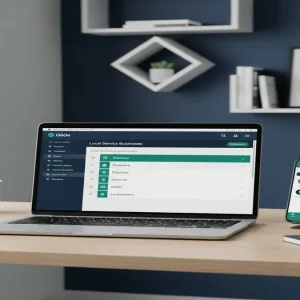
Think of a micro-directory as a highly specialized version of Yelp or Angie’s List, but focused on a singular, high-value niche in a specific geographic area or industry. Instead of trying to list every business in Chicago, you build ‘The Definitive Guide to Luxury Custom Home Builders in North Austin’ or ‘The Top 15 Specialized Pediatric Dentists in Greater Miami.’ It is a curated list of the best service providers in a space where the average customer value is high. Because these sites are so focused, they are incredibly easy to rank on Google for ‘best [service] in [city]’ keywords, which is exactly where the high-intent money lives.
Why This Model Crushes Traditional E-commerce
The best part about this model? You are solving the ‘discovery’ problem for both the consumer and the business owner. When a homeowner needs a $50,000 kitchen remodel, they don’t want to scroll through 500 random listings; they want a vetted list of the top five. By providing that list, you become the gatekeeper of high-value leads. Unlike dropshipping, where your margins are squeezed by rising ad costs, a micro-directory has almost zero overhead. Your primary investment is time and a few affordable no-code tools. Once the site ranks, the traffic is organic, and the profit margins often exceed 90%.
The Psychology of the Business Owner
Why would a business owner pay you $4,000 for a simple directory site? It comes down to customer acquisition costs. If a roofing contractor knows that a single lead is worth $15,000 in revenue, they will happily pay a premium to be the ‘Featured Partner’ on a site that dominates local search results. You aren’t selling them a website; you are selling them a shortcut to their next six-figure contract. When you approach them with a site that is already getting traffic, the sale becomes an easy mathematical decision for them.
Your 5-Step Blueprint to the First Flip
Step 1: Identify a High-Ticket, Low-Tech Niche
You need to look for industries where the average transaction is over $2,000 and the business owners are generally ‘old school.’ Think HVAC, specialized medical clinics, luxury landscaping, or boutique law firms. Avoid niches like coffee shops or bookstores where the margins are too thin to support a high-ticket acquisition. Use tools like Ahrefs or even Google’s Keyword Planner to find cities where the competition for ‘Best [Niche] in [City]’ is low but the search volume is steady.
Step 2: Build Your No-Code Infrastructure
Don’t waste weeks coding a custom solution. Use a ‘No-Code’ stack like Carrd.co for a simple landing page or Softr.io paired with Airtable for a more robust, searchable directory. Your goal is to create a clean, professional interface that looks like a high-end editorial resource. Populate your directory with 10-15 of the best businesses in the area. At this stage, you don’t need their permission; you are simply providing a public service by listing publicly available information.
Step 3: The ‘Authority’ SEO Sprint
Once your structure is live, you need to make it rank. Write 3-5 high-quality blog posts like ‘5 Things to Ask Before Hiring a Roofer in Austin’ or ‘Why Custom Cabinets Increase Your Home Value by 20%.’ These articles provide the ‘contextual relevance’ that Google loves. Use local backlinks by reaching out to local news blogs or community forums. Because your niche is so narrow, you’ll often find yourself on page one within 30 to 45 days without much effort.
Step 4: The ‘Featured Listing’ Beta Test
Before you flip the whole site, prove its value. Reach out to the #3 or #4 business on your list and offer them the ‘Featured’ spot for free for 30 days. In exchange, ask them to track how many calls or emails they get from your site. When they see the quality of the leads coming in, you have successfully validated your asset. This data becomes your ‘sales deck’ when you decide to sell the entire site or move to a monthly subscription model.
Step 5: The High-Ticket Exit
Now you have a choice: keep the site and charge 3-5 businesses a monthly ‘maintenance fee’ of $200 each, or flip the entire asset. To flip it, reach out to the most aggressive marketer on your list. Tell them: ‘I’ve built the #1 resource for your niche in this city. I’m looking to hand it off to one exclusive partner who wants to own the traffic and the leads forever.’ A site generating 20-30 high-quality leads a month can easily command a $4,000 to $6,000 exit price.
Realistic Earnings and Timelines
Let’s talk numbers. This isn’t a ‘get rich tomorrow’ scheme, but it is a ‘get paid well in 60 days’ strategy. Your initial investment will be roughly $50 (domain and a basic Carrd or Softr subscription). For your first project, expect to spend 20 hours on research and setup. Most practitioners see their first ‘Featured Listing’ sale ($200-$500) within 45 days. A full site flip typically happens between month three and month six. If you run three of these directories simultaneously, a monthly income of $2,000 in ‘rent’ plus one $4,000 flip per quarter is a very realistic $35,000 – $45,000 annual side income.
The Essential Tool Stack
- Softr.io: The best platform for building functional directories without code.
- Airtable: Your backend database to manage business listings and lead data.
- Hunter.io: To find the direct email addresses of business owners for outreach.
- Google Search Console: To track your rankings and see exactly what keywords people are using.
- Canva: For creating professional-looking featured images and site logos.
Common Pitfalls to Avoid
First, don’t go too broad. A directory for ‘All Businesses in Florida’ is worthless because you can’t rank it. Stay ‘hyper-local’ and ‘hyper-niche.’ Second, don’t over-automate your outreach. Business owners get 500 spam emails a day. A personalized video using Loom showing them their listing on your site will get a 10x higher response rate than a generic template. Finally, don’t neglect the mobile experience. Most people looking for local services are doing so on their phones, so ensure your directory is lightning-fast and mobile-responsive.
Your Next Move
The digital real estate market is wide open because everyone else is too busy fighting over the same saturated Amazon products. Here is your one clear next step: Spend the next 30 minutes on Google Maps looking at a city with 100,000+ residents and find a service industry with high-ticket prices (like foundation repair or solar installation). If the current ‘Best of’ lists look outdated or non-existent, you’ve just found your first goldmine. Start building today.