The Invisible Goldmine Hidden in Your Chat History
Most people are using ChatGPT to write mediocre emails or summarize long articles, but a small group of savvy creators is quietly earning $4,000 a month by selling the ‘brain’ behind the bot. Here is the reality: business owners are currently suffering from ‘prompt fatigue.’ They know AI can save them time, but they don’t have the patience to spend six hours talking to a chatbot to get the perfect result. They want a turnkey solution that works instantly.
📹 Watch the video above to learn more!
What if you could package your expertise into a digital ‘persona’ that a real estate agent, a developer, or a fitness coach could plug into their workflow immediately? This isn’t just about selling a list of sentences; it is about building high-level system instructions that transform a generic AI into a specialized employee. You are not selling text; you are selling a repeatable outcome that saves a founder 20 hours a week.
What Exactly Is a Custom AI Persona?
A custom AI persona, often referred to as a ‘System Prompt’ or a ‘GPT Wrapper’ logic, is a complex set of instructions that dictates exactly how an AI behaves, thinks, and outputs data. Think of it as a pre-configured digital brain. While the average person asks, ‘Write me a blog post,’ your custom persona knows the specific brand voice, the SEO constraints, the target audience’s pain points, and the exact formatting required for a high-converting article.
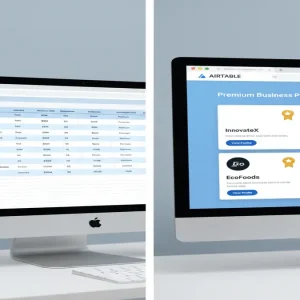
These personas are stored as ‘Custom GPTs’ on OpenAI or as specialized templates on platforms like Gumroad or PromptBase. When a founder buys your persona, they are buying your logic and your industry knowledge. You are essentially licensing your professional brain to hundreds of people at once. It is the ultimate evolution of the digital product, and the market is currently starving for quality over quantity.
Why the Market for ‘Logic Assets’ is Exploding Right Now
The barrier to entry for most online businesses is getting higher, but the demand for efficiency is at an all-time high. Founders are willing to pay a premium for tools that eliminate the ‘blank page’ problem. They don’t want to learn how to prompt; they want the prompt to already be perfect. This creates a massive opportunity for anyone who can bridge the gap between AI capability and industry-specific needs.
The best part? Once you build a robust persona for a specific niche—say, an ‘SaaS Legal Compliance Architect’ or a ‘High-Ticket Sales Closer’—the cost of selling it to the second, hundredth, or thousandth customer is exactly zero. You are building digital real estate that pays rent every time someone hits the ‘purchase’ button. It is a scalable, low-overhead model that relies on your ability to think critically, not your ability to code.
The 5-Step Blueprint to Building Your Persona Empire
You don’t need a computer science degree to start this. You just need a deep understanding of a specific problem and the patience to refine the AI’s response until it is flawless. Here is how you can go from zero to your first sale in less than two weeks.
Step 1: Identify a High-Value ‘Pain Point’ Niche
Don’t try to build a general assistant. Instead, look for industries where time equals significant money. Real estate agents, legal researchers, and e-commerce store owners are perfect targets. Ask yourself: What is a task in this industry that is repetitive, requires specific knowledge, and takes more than an hour? That is your product. Your goal is to solve a $500 problem with a $50 digital asset.
Step 2: Architect the System Instructions
This is where the ‘engineering’ happens. You need to write a detailed set of constraints for the AI. Tell it who it is, what its goals are, what it must never do, and exactly how to format its answers. Use ‘Chain of Thought’ prompting techniques where you instruct the AI to think step-by-step before providing a final answer. This ensures the quality of the output is significantly higher than what a user would get from a basic prompt.
Step 3: Stress-Test for Edge Cases
A product that breaks is a product that gets refunded. You must throw every possible curveball at your persona. If it’s a legal research assistant, try to trick it into giving bad advice or breaking character. Refine the instructions until the AI is ‘locked in.’ The value of your product lies in its reliability. A founder will pay $100 for a tool that works 100% of the time but won’t pay $1 for something that requires constant babysitting.
Step 4: Package the Logic on a Marketplace
You have two main paths here. You can list the raw prompt on PromptBase, or you can create a Custom GPT and sell access to the ‘instructions’ via a protected Gumroad page or a Notion dashboard. Packaging is everything. Give your persona a name, a professional avatar (use Midjourney for this), and a clear list of ‘What this tool will do for you.’ Sell the result, not the technology.
Step 5: The ‘Sample-to-Sale’ Marketing Loop
The easiest way to sell a digital brain is to show it in action. Create short screen-recording videos of the persona solving a complex problem in seconds. Post these on LinkedIn or X (Twitter) where founders hang out. Offer a ‘lite’ version of the prompt for free in exchange for an email address, then upsell the full-featured ‘Pro’ persona. This builds a funnel of warm leads who have already seen the value you provide.
Realistic Earnings: What Can You Actually Make?
Let’s talk numbers because that is why you’re here. A specialized, high-quality persona typically sells for anywhere between $29 and $99. If you target a high-ticket niche like ‘M&A Due Diligence’ or ‘Technical SEO Auditing,’ you can easily charge $150+ per license. Selling just two $49 personas a day nets you nearly $3,000 a month. Most successful ‘Persona Architects’ maintain a portfolio of 5-10 different niches, allowing them to reach that $4,000 – $7,000 range within 90 days of starting.
Your Essential Toolkit for Success
- ChatGPT Plus: Necessary for building and testing Custom GPTs ($20/month).
- Gumroad: To host your digital products and handle payments safely.
- Midjourney: To create high-end, professional avatars for your AI personas.
- Notion: To organize your prompt library and deliver instructions to customers.
- PromptBase: The leading marketplace specifically for buying and selling AI prompts.
Common Mistakes That Will Kill Your Sales
First, avoid being too broad. A ‘Marketing Assistant’ is worthless because everyone has one. An ‘Instagram Caption Strategist for Luxury Watch Dealers’ is a goldmine. Second, don’t ignore updates. AI models change, and your prompts might need tweaking every few months to stay sharp. Finally, never skip the ‘System Instructions’—if you just sell a simple one-sentence prompt, your customers will feel cheated and ask for a refund. Provide depth.
The Next Step Toward Your First $1,000
The window for being an early adopter in the ‘Persona Economy’ is closing, but the demand is only getting started. Your immediate next step is to pick ONE industry you know well and write down the three most annoying tasks they face daily. Choose one of those tasks, open ChatGPT, and start building a digital persona that solves it better than a human could. Once you have a working prototype, list it on Gumroad and share the results with five people in that industry. Your journey from a ‘user’ to a ‘creator’ starts with that first line of system instruction.