The Lucrative Reality of Specialized Digital Organization
You are likely sitting on a digital goldmine without even realizing it: your ability to organize chaos into a functional system. While most people are busy trying to sell generic ‘productivity planners’ that get lost in the noise of Etsy, a small group of savvy creators is quietly generating $4,000 to $8,000 per month by solving one very specific problem. They aren’t just building templates; they are building ‘External Brains’ for the neurodivergent community, specifically those managing ADHD. Here is the thing: the demand for specialized, dopamine-friendly organization tools has outpaced the supply, creating a massive opportunity for anyone who can click a few buttons in Notion.
📹 Watch the video above to learn more!
What Exactly is a ‘Neuro-Inclusive’ Notion Operating System?
Let me show you why this is different from your standard to-do list. A neuro-inclusive Notion template is a pre-built workspace designed specifically to combat executive dysfunction. It’s not just about tracking tasks; it’s about reducing the ‘friction’ of starting them. These systems use specific layouts like ‘Brain Dumps,’ ‘Dopamine Menus,’ and ‘Visual Habit Trackers’ that cater to how an ADHD brain actually processes information. You aren’t selling a software layout; you’re selling a solution to mental overwhelm. When you package this into a downloadable Notion link, you’ve created a digital asset that you build once and sell indefinitely.
Why This Micro-Niche Is Exploding Right Now
Why does this work so much better than general productivity tools? It comes down to the psychology of ‘The One-Stop Shop.’ People with ADHD often struggle with ‘app hopping’—jumping from a calendar app to a notes app to a reminder app, losing focus every time they switch. By building a comprehensive ‘Life Dashboard’ in Notion, you provide a single source of truth. The best part? The neurodivergent community is incredibly vocal and supportive. Once you solve a problem for one person, the word-of-mouth marketing in communities like Reddit and TikTok does the heavy lifting for you. You aren’t fighting an algorithm; you’re serving a community that is actively searching for help.
Your 5-Step Blueprint to Building a Notion Empire
Step 1: Identify the Specific Friction Point
Don’t try to build a ‘Life Planner’ right out of the gate. That is too broad and intimidating for both you and the buyer. Instead, focus on one specific pain point. Is it meal planning for people who forget to eat? Is it a student dashboard for neurodivergent university students? Go to subreddits like r/ADHD or r/Notion and look for posts that start with ‘How do I organize…’ or ‘I’m struggling with…’ These are your product ideas. Your goal is to find a recurring frustration and design a three-page system that solves it. Remember, simplicity is a feature, not a bug.
Step 2: Build for ‘Low Friction’ and High Visuals
When you start building in Notion, keep the ‘two-click rule’ in mind. If it takes more than two clicks to log a task, an ADHD user will likely stop using the system. Use large, clear buttons (Notion’s ‘Button’ block is your best friend) and aesthetic icons. Use a color-coding system that makes sense—like ‘High Energy’ vs. ‘Low Energy’ tasks. The visual appeal is just as important as the functionality. A ‘pretty’ dashboard provides a small hit of dopamine that encourages the user to return to the workspace. Use sites like Indify or Apption to add custom widgets like weather or progress bars to give it a premium feel.
Step 3: Create the ‘Instructional Overlay’
One of the biggest mistakes creators make is sending a template without instructions. To make your product ‘sell itself,’ you need to embed the tutorial directly into the template. Use Notion’s ‘Callout’ blocks to explain how to use each section. Better yet, record a 5-minute Loom video walking through the system and embed it at the very top. This reduces customer support emails and increases the perceived value of your product. When a customer feels confident using your tool within the first sixty seconds, they are ten times more likely to leave a five-star review.
Step 4: The ‘Freemium’ Lead Magnet Strategy
How do you get people to trust your system? You give them a ‘micro-win’ for free. Create a stripped-down version of your template—perhaps just the ‘Daily Brain Dump’ section—and offer it for free on platforms like Gumroad or Buy Me a Coffee. In the ‘Thank You’ email and at the bottom of the free template, include a discount code for your ‘Full ADHD Life Operating System.’ This builds an email list of qualified leads who already use and like your work. This funnel is the secret to consistent, passive daily sales without spending a dime on ads.
Step 5: Optimize for the ‘Notion Discovery’ Ecosystem
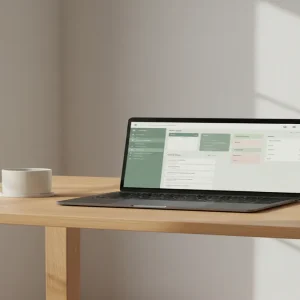
Once your product is ready, you need to place it where the buyers are. Don’t just rely on your own social media. Submit your template to curated marketplaces like Notionery, Prototion, and the official Notion Template Gallery. These sites already have thousands of visitors searching for ‘ADHD’ daily. Use high-quality mockups created in Canva to show what the template looks like on both a laptop and a mobile phone. Write a description that focuses on the *emotional* benefit—use phrases like ‘Stop feeling overwhelmed’ and ‘Finally clear the mental fog.’
Realistic Earnings and Timeline
Let’s talk numbers because transparency is key. A specialized ADHD Notion template typically sells for $29 to $67, depending on the complexity. If you are priced at $39 and sell just three templates a day, you are looking at roughly $3,500 per month in profit. Most beginners earn their first $100 within 14 days of listing on Gumroad, provided they share the link in relevant communities. Scaling to $4,000/month usually takes 3 to 6 months of consistent ‘template stacking’—building a suite of 3-5 interconnected products that customers can bundle together.
Essential Tools for Your Notion Business
- Notion: The core platform (Free version is enough to start).
- Gumroad: To host your digital downloads and process payments.
- Canva: For creating professional-looking product thumbnails and mockups.
- Loom: For recording your ‘How-to’ video walkthroughs.
- Tally.so: For gathering feedback from your early beta testers.
Common Pitfalls to Avoid
- Over-Engineering: Don’t add 50 databases if 2 will do. Too much complexity leads to user abandonment.
- Ignoring Mobile View: Many users check their Notion on their phone. Ensure your ‘Buttons’ and ‘Galleries’ look good on a narrow screen.
- Static Marketing: Don’t just post a link. Post a ‘Build with Me’ video on TikTok or a ‘How I organized my day’ thread on Twitter to show the product in action.
Take the First Step Today
The transition from a consumer to a creator starts with a single page. You don’t need a computer science degree or a massive following to start this business; you just need to solve a problem you’ve already solved for yourself. Here is your immediate next step: Open a blank Notion page right now and create a ‘Daily Reset’ checklist that would have helped you yesterday. That simple list is the foundation of your first $4,000 month. What are you waiting for? Start building your digital asset today.