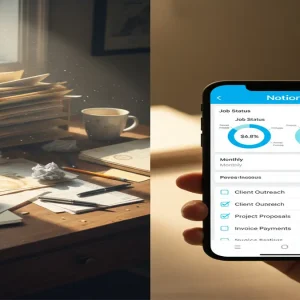
The Hidden Crisis of the Information Age
Did you know that the average Fortune 500 executive receives over 120 emails a day and spends nearly 25% of their working week just trying to stay ‘informed’? It’s a staggering waste of high-value time that creates a massive, hidden opportunity for you to step in as a digital gatekeeper. You don’t need to be a world-class writer or a subject matter expert to capitalize on this; you just need to be better at filtering the noise than they are. The era of the generalist is over, but the era of the high-ticket curator is just beginning.
📹 Watch the video above to learn more!
What is Ghost-Curation?
Ghost-curation is the high-income alternative to traditional newsletter writing. Instead of building a massive public audience on Substack and hoping for $5 monthly subscriptions, you are providing ‘Information-as-a-Service’ to a single, high-level client or a small group of executives. You act as a human filter, scouring industry news, technical journals, and social trends to deliver a private, bespoke intelligence brief directly to their inbox or Slack. Think of yourself as a private investigator for information. You aren’t creating original content; you are selecting the 1% of content that actually matters to their specific business goals. While others are busy trying to go viral, you are getting paid to save a CEO five hours of research every single week. It is a premium, invisible service that solves the modern epidemic of decision fatigue.
Why the Information Diet is the New Status Symbol
The best part? Busy executives don’t want more information; they want the *right* information with a ‘So What?’ attached to it. They are currently drowning in generic news, and they are willing to pay a premium for someone to throw them a lifeline. This works because it directly impacts their bottom line. If your curated brief helps a SaaS founder spot a competitor’s move or a new regulation 48 hours before anyone else, that information is worth thousands of dollars. You are selling time, clarity, and competitive advantage. Unlike freelancing on platforms like Upwork where you compete on price, ghost-curation is a value-based service. Because you are operating in the ‘private’ sphere of their business, you become an indispensable asset rather than a replaceable vendor. You aren’t just a writer; you’re an intelligence officer for their personal brand or company.
How to Get Started as a Ghost-Curator
Step 1: Identify a High-Velocity Niche
You need to choose a niche where things change fast and the stakes are high. Avoid general ‘business’ or ‘marketing.’ Instead, look at ‘AI Regulation in Fintech,’ ‘Supply Chain Logistics for E-commerce,’ or ‘Sustainable Energy Policy.’ These are fields where missing a single update can cost a company millions. Your goal is to find a niche where the decision-makers have high disposable income but zero time. Spend three days researching who the key players are on LinkedIn and what specific problems they are currently vocalizing.
Step 2: Build Your Intelligence Dashboard
You cannot curate effectively if you are manually searching Google every morning. You need to build a ‘Signal-to-Noise’ engine. Use a tool like Feedly to aggregate RSS feeds from industry-specific blogs, set up Google Alerts for very specific long-tail keywords, and use Twitter Blue to follow ‘Lists’ of industry insiders. Your job is to have the information flow to you so you can spend your time analyzing, not searching. This setup should take you about 4-5 hours to perfect, but once it’s done, it does 80% of the heavy lifting for you.
Step 3: Create the ‘Zero-Fluff’ Briefing Template
Executive summaries must be scannable. Your template should include three sections: ‘The Big Three’ (the three most important links of the day), ‘The Why’ (a 2-sentence explanation of why this matters to the client), and ‘The Action’ (a suggested next step). Never send a wall of text. Use bullet points and bold text to highlight the most critical data. The goal is for the executive to read your brief in under 120 seconds and feel completely caught up. This brevity is exactly what they are paying for.
Step 4: The 5-Day ‘Proof of Concept’ Outreach
Don’t ask for a job; provide the value first. Identify 10 potential clients on LinkedIn. For five days, send them a personalized, 3-point daily brief via DM or email for free. On day six, stop. When they realize they miss the clarity you provided, send a simple message: ‘I’ve enjoyed sending these briefs this week. I’m opening up two spots for private curation clients to handle this on a permanent basis. Would you like to see the pricing packages?’ This ‘show, don’t tell’ method has a significantly higher conversion rate than cold pitching.
Step 5: Automating the Delivery and Feedback Loop
Once you land a client, use Beehiiv or ConvertKit to send the private briefs. This allows you to see if they are opening the emails and which links they are clicking on. Every month, ask one question: ‘What was the most valuable piece of info I sent this month?’ Use this feedback to sharpen your filter. As you get better, you can increase your rates or productize the brief for a small group of 5-10 people in the same industry to scale your income without increasing your workload.
Realistic Earnings and Timelines
Ghost-curation is a high-ticket play. A standard rate for a bespoke, daily (M-F) brief is between $800 and $1,500 per month per client. If you manage five clients—which is manageable once your dashboard is set up—you are looking at $4,000 to $7,500 per month. Most curators spend about 30-45 minutes per client per day. This brings your effective hourly rate to roughly $150/hour. You can realistically earn your first dollar within 14 days of starting your outreach, as the ‘Proof of Concept’ phase builds immediate trust.
Your Ghost-Curation Toolkit
- Feedly: For aggregating industry news and using AI ‘Leo’ to filter topics.
- LinkedIn Sales Navigator: For finding and vetting high-level executives.
- Beehiiv: For professional, clean delivery of your private briefs.
- Hunter.io: To find the direct email addresses of decision-makers.
- Notion: To organize your research and client feedback.
Common Mistakes to Avoid
- Being a ‘Link Dumper’: If you just send links without context, you are a bookmark folder, not a curator. Always include ‘The Why.’
- Ignoring the Format: If your brief isn’t mobile-friendly, it won’t be read. Executives check their phones between meetings; optimize for that experience.
- Targeting the Wrong Level: Don’t target middle managers; they don’t have the budget. Target Founders, CEOs, or VPs of specific departments.
Conclusion: Your Next Step
The world is only getting noisier, which means the value of a professional filter is only going up. You don’t need a fancy degree or a massive following to start this business; you just need the discipline to find the signal in the noise. Your one clear next step: Choose one ‘High-Velocity’ niche today and set up your first 10 RSS feeds in Feedly. The information is already out there—now go get paid to find it.