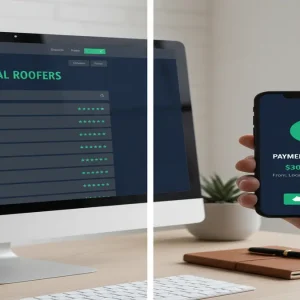
The Invisible Income Stream Hiding in Local Search Data
Most local business owners are terrified of the Google algorithm, yet they are sitting on a goldmine of untapped traffic that they simply don’t know how to access. While every other freelancer is fighting for $15-an-hour writing gigs, a small group of digital entrepreneurs is quietly earning $4,500 a month by selling specialized, automated SEO audit dashboards. Did you know that a single local plumber can lose up to $10,000 in revenue every month just because their Google Business Profile is missing three specific keywords?
📹 Watch the video above to learn more!
You don’t need to be a coding genius or a high-level marketing consultant to fix this. In fact, the most successful people in this niche aren’t doing the manual labor at all. They are leveraging automated data visualization to turn complex technical jargon into a ‘red-light, green-light’ report that business owners actually understand. Here is the secret: local contractors don’t want a 50-page SEO manual; they want a 1-page roadmap that tells them why their competitor is getting the phone calls they aren’t.
What Exactly is a Productized SEO Audit?
Instead of selling ongoing monthly SEO services—which involve high pressure and constant client management—you are selling a one-time ‘Diagnostic Digital Asset.’ Think of it like a home inspection for a website. You use specific software to pull data on a business’s local rankings, site speed, and backlink profile, then pipe that data into a clean, white-labeled dashboard. It’s a high-value, low-fulfillment product that addresses a specific pain point: the fear of being invisible online.
The Shift from Service to Product
When you sell ‘SEO,’ you’re selling a vague promise of future results. But when you sell an ‘Automated Local Growth Audit,’ you’re selling a concrete product with a beginning and an end. This shift is crucial because it allows you to charge premium prices for something that takes you less than twenty minutes to generate once your systems are in place. You aren’t an employee; you’re a data provider.
Why Local Contractors Are Your Best Customers
Why focus on plumbers, roofers, and HVAC companies? The answer is simple: their Average Order Value (AOV) is massive. A single roof replacement can net a contractor $15,000. If your audit shows them how to capture just one more of those leads per month, your $350 report pays for itself forty times over. They aren’t looking for the cheapest option; they are looking for the clearest path to more jobs.
High Stakes and Low Technical Literacy
Most contractors are brilliant at their craft but struggle with anything involving a screen. They know they need to be on the first page of Google, but they find the process overwhelming. By providing a visual, easy-to-digest report, you become the bridge between their technical confusion and their business goals. You aren’t just selling data; you’re selling clarity and a competitive edge.
How to Build Your Audit Engine in 5 Steps
-
Identify Your High-LTV Niche
Don’t try to help everyone. Pick one industry, like foundation repair or luxury landscaping, where the profit margins are high. Use a tool like Hunter.io to find the email addresses of business owners in a specific city who are currently ranking on the second or third page of Google.
-
Set Up Your Looker Studio Template
Google Looker Studio is your best friend. Create a master template that pulls in data from Google Search Console and a local rank tracker. You want a dashboard that uses big, bold charts to show where they are losing to competitors. Make it look professional, clean, and branded with your own logo.
-
The ‘Foot-in-the-Door’ Loom Technique
Before you ask for a sale, record a 2-minute Loom video. Show them one specific ‘leak’ in their current digital presence—maybe their images aren’t geotagged or their site isn’t mobile-responsive. Send this video as a ‘free gift.’ This builds immediate authority and proves you’ve actually looked at their business.
-
Automate the Data Pull
Use a tool like BrightLocal or Semrush to run the heavy technical scans. These tools allow you to export white-labeled reports. Your job is to take those raw numbers and highlight the three most important ‘Quick Wins’ that will move the needle for their business immediately.
-
The ‘Roadmap’ Delivery
Once they pay your $350 invoice via Stripe, send them the full dashboard along with a 5-step checklist of how to fix the issues. The beauty of this model? You can offer to implement the fixes for an additional $1,500, or simply walk away with your profit for the audit alone.
Realistic Earnings and Timelines
Let’s talk numbers. If you reach out to 10 businesses a day (which takes about an hour), you can realistically expect 2-3 interested replies per week. Closing just two audits a week at $350 each nets you $2,800 a month. As you get faster, you can scale to 4-5 audits a week. The initial setup of your templates will take about 5-10 hours of focused work. After that, each audit takes about 15-20 minutes of actual labor. Most beginners see their first paid invoice within 14 to 21 days of consistent outreach.
Essential Tools for Your Invisible Agency
- BrightLocal: For accurate local ranking data and automated reporting.
- Loom: For sending personalized video pitches that convert.
- Google Looker Studio: To build your beautiful, client-facing dashboards.
- Stripe: For professional, seamless payment processing.
- Canva: To create a professional ‘Optimization Roadmap’ PDF template.
Common Pitfalls to Avoid
Don’t Get Bogged Down in Tech-Speak
The biggest mistake is explaining what ‘canonical tags’ or ‘schema markup’ are. The contractor doesn’t care. Instead, say: ‘Your website is currently invisible to people searching for emergency repairs on their phones.’ Speak in terms of phone calls and revenue, not clicks and impressions.
Avoid Manual Data Entry
If you find yourself typing numbers into a spreadsheet, you’re doing it wrong. The entire point of this model is leverage. Use APIs and automated connectors to pull the data. Your value is in the interpretation of the data, not the collection of it.
Stop Selling to ‘Broke’ Businesses
Avoid niches like coffee shops or bookstores where the profit margins are thin. If a customer is only worth $20 to the business, they won’t value your $350 audit. Stick to ‘high-stakes’ industries where a single lead is worth hundreds or thousands of dollars.
Your Next Step Toward $4K a Month
The difference between people who make money online and those who don’t is the ability to package information into a solution. You now have the blueprint for a high-margin micro-business that requires zero inventory and minimal overhead. Your immediate next step is to choose one high-value niche (like roofing or dentistry) and find 10 businesses in a mid-sized city that aren’t in the ‘Map Pack’ top three. Record your first Loom video today and see how powerful a little bit of clarity can be for a frustrated business owner.