The Secret Market Inside Your Own Notebooks
Most students spend thousands of hours taking meticulous notes, only to let them gather dust in a digital folder once the semester ends. Here is the reality: those organized, high-quality summaries are currently being sold for hundreds of dollars to peers who are desperate for a shortcut to passing their exams.
📹 Watch the video above to learn more!
You aren’t just selling paper; you are selling the gift of time and clarity. By transforming your raw class notes into structured, aesthetic digital study guides, you can create a high-margin asset that sells on autopilot while you sleep.
What is a Digital Study Guide Business?
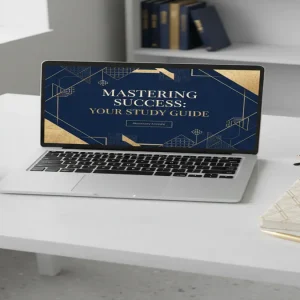
This business model involves packaging complex academic information—like biology diagrams, law case briefs, or coding syntax sheets—into visually appealing, downloadable PDF documents. You aren’t teaching; you are curating and simplifying existing knowledge into a ‘cheat sheet’ format that students find indispensable.
Why This Strategy Actually Works
Students are constantly overwhelmed by information density. When you provide a streamlined, beautifully formatted guide that distills a 300-page textbook into 20 pages of actionable high-yield facts, you solve a painful problem. Because the product is digital, your profit margin is nearly 100% after the initial creation time.
How to Build Your Study Guide Empire
You don’t need a degree in graphic design to start. You just need a system for turning raw data into a premium product.
Step 1: Identify Your High-Demand Niche
Do not target general subjects like ‘History 101.’ Instead, focus on ‘High-Stakes Certification Prep’ or ‘Medical School Anatomy Modules.’ These are subjects where students have money and an urgent need to perform.
Step 2: Create a Visual System
Use platforms like Canva or Notion to build a consistent aesthetic. Your guides should look professional, utilizing bold headers, bullet points, and color-coded sections that make information easy to digest at 3 AM.
Step 3: Choose Your Marketplace
Platforms like Stuvia, Nexus Notes, and Gumroad are built specifically for this. Stuvia is particularly powerful because it already has a massive audience of students searching for exactly what you have created.
Step 4: The ‘Sample’ Strategy
Never hide your best work. Offer the first three pages of your guide for free as a preview. If your content is genuinely helpful, the conversion rate from ‘freebie’ to ‘paid customer’ will be significantly higher than if you keep it all locked away.
Step 5: Scaling Through Bundles
Once you have five individual guides, group them into a ‘Semester Success Bundle.’ You can sell the bundle for 30% less than the individual prices combined, which increases your average order value without extra effort.
Realistic Earnings and Expectations
If you play your cards right, this isn’t just pocket money. A single popular study guide can net you $20–$50 per sale. With a consistent content library, it is entirely realistic to earn between $1,500 and $5,000 per month during peak academic seasons.
Investment and Timeline
Your investment is primarily time—roughly 10–15 hours per guide. Financial cost is near zero if you use free tools. You can expect your first sale within 14 to 30 days of uploading your first batch of notes to a marketplace.
Essential Tools to Get Started
- Canva: For designing clean, professional layouts.
- Notion: For organizing your research and building interactive databases.
- Stuvia: Your primary storefront for reaching motivated student buyers.
- Grammarly: To ensure your notes are error-free and credible.
Common Mistakes to Avoid
Don’t Ignore Formatting
If your document is a wall of text, nobody will buy it. Use whitespace, icons, and clear typography to make the content ‘scannable.’ Aesthetics equal perceived value in the digital product world.
Don’t Ignore SEO
When you upload your files, use keywords in your titles that students actually search for, such as ‘Nursing Pharmacology Cheat Sheet’ rather than ‘My Class Notes.’
Don’t Forget Legal Boundaries
Always ensure your notes are original. Never copy-paste textbook content directly, as that violates copyright laws. Summarize in your own words, and you are protected under fair use and educational transformation.
Your Next Step
The best time to start is now, while you are already in the mindset of learning. Open a blank document, choose one subject you have mastered, and create a 5-page ‘Master Summary’ of a single module. Once that is done, upload it to Stuvia and see the market reaction for yourself. Stop letting your hard work go to waste—turn it into a digital asset today.